|
Creation, the Fall, and the Restitution of Adam (Mankind) |
|
|
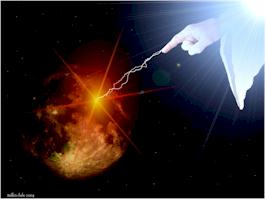
Now don't get nervous, this has nothing to do with Roman Catholicism. The word "Catechism" means merely "a summary of the principles of Christian religion in the form of questions and answers, used for the instruction of Christians" or, in the non-Christian sense "a series of fixed questions, answers, or precepts used for instruction in other situations" When God created "Adam" (Mankind), He created him in His (God's) image. Now, this does NOT mean (as some carnal-minded teachers have propounded) that God does - in fact - bear OUR physical image. Rather, it means that, since God is a "Trinity" in nature, He fashioned Adam likewise !!
Now this term "Trinity" is one of those obscure "Theological Terms" that humans use to put into words that which we can not REALLY express, understand nor visualize ! In common usage, it is defined as meaning that God is "one in essence but three in persons" (Father, Son and Spirit). We also need to distinguish the fact that it is NOT the "human or creaturely" Jesus who is a part of the Trinity, but it is rather "The Word", of which He is the material expression, incarnation, or personification.
Physicists (especially in the realm of Quantum Physics) often use what they call "models" to enable them to deal with, discuss, and visualize that which - the REALITY of such - they REALLY know NOTHING about. They admit and know that the model is NOT the same as the reality. Too bad that most "Theologians" don't possess the same degree of humility. Boehme had this problem in his writings. God had revealed to his mind and spirit His (God's) realities, but Boehme could ONLY write about them in earthly terms, using the state of reality that he himself knew at THAT time.
In the understanding that Boehme received, "The Divine" exists in three "Principles or Worlds": (1.) The principle of Fire - the primeval world of chaos, desire, discord, fire, and undifferentiated pure energy - known as Father.
It might be stated that: the Father conceives - the Son formulates - and the Spirit executes. Now it needs to be observed and understood that the contrary and opposing forces of Fire and Light (also referred to by Boehme as attraction and opposition) are absolutely necessary for ALL life, be it heavenly (spiritual) as well as earthly (creaturely). Within God Himself, the Heavenly (Eternal) realm, as well as ORIGINALLY within Adam - these principles or worlds functioned together in harmony. They were never intended to be separated or to exist alone. To use a VERY inadequate example, a water molecule consists of two atoms of hydrogen and one atom of oxygen. As individual entities, neither of them bears ANY similarity to water. As a matter of fact, hydrogen is a volatile, explosive gas while oxygen is an inert gas, but the foundation of all creaturely life.
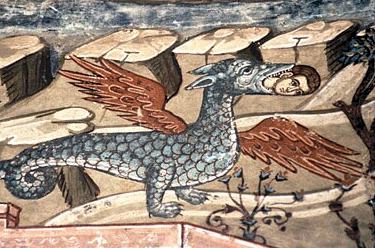
Such did He likewise create Adam in his heavenly state in Paradise. In Adam, the Light principle was to be his "Life", and as such, He lived in harmony and constant communion with God. He was given power and dominion over the entire creaturely, earthly world - to govern it, nurture it, and bring forth in it increasing measures of Glory. However, God warned him NOT to set his heart upon the creaturely world - to want to personally experience, know, to be a part of, or to desire after ITS Life. If he did, he would loose his heavenly life - his spiritual union with God - and become just like one of the creatures of this lower world. Well, as we know, he WAS so tempted, he DID succumb, and he DID loose his union with the Divine Life. As a consequence, he was cast out of Paradise, since, as he was now constituted, he could no longer function or live within it.
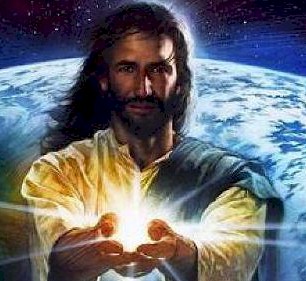
As a remedy, God again implanted within Adam the seed of His Divine Life (the bruiser of the serpent) which, in the "Fullness of Time", would bring forth THE One - the Divine made flesh. He would again bring the Divine Life - the Life of Heaven - back into mankind, and enable said mankind to again be restored to his original position in union and communion with God.
|
|
An excerpt from "The Way to Christ", the Fifth Treatise -- on the New Birth ** by Jacob Boehme As stated above, this article owes its origin to the revelations granted by God to a German Lutheran Mystic and Theosopher of the 1600's by name of Jacob Boehme. His writings are VERY obscure and hard to read until you become acquainted with his particular style of writing, the material that he is writing about, and the understanding of society as it existed at THAT time. The following is just a VERY brief outline (or summary) of the VERY deep revelations that God granted to him concerning this subject. It took me a LONG time and MUCH effort to be able to understand his writings. However, as the Scripture states, "If you want to acquire the "Deep Treasures", you need to be willing to seek, to search and to dig for them. He who sows sparingly will reap sparingly. On the other hand, he who sows abundantly will likewise reap abundantly" !! At the end of this article, there is a link to a WEB site devoted to him, featuring an EXTENSIVE collection of his writings, plus information regarding the man himself. Chapter One 1. Christ says, Except you be converted, and become as little children, you shall not see the kingdom of God (Matthew 18:3). And He again said to Nicodemus: Except one be born again out of water and the spirit, he cannot enter into the kingdom of God for what is born of the flesh is flesh; and what is born of the spirit is spirit (John 3:5-6). The Scriptures clearly testify that fleshly, natural man gains nothing from the Spirit of God. To him it is foolishness and he cannot grasp it. 2. However, although we all have flesh and blood [and] in addition are mortal, as is evident, at the same time the Scripture says that we are also a temple of the Holy Spirit that lives in us (1 Corinthians 6: 19), and that the kingdom of God is within us (Luke 17:21), yes that Christ must win a form in us (Galatians 4:19), and that He wishes to give us His flesh as food and His blood as drink, and further it says: He who does not eat the flesh of the son of man has no life in Him (John 6:53). Because of this we must consider earnestly what kind of man is in us who can be like to and capable of the Godhead. 3. This cannot be said concerning mortal flesh, which will become earth and lives in the vanity of the world, and which continually lusts against God, that it is the temple of the Holy Spirit, much less that the new birth occurs in this earthly flesh, since it dies and disappears and is, moreover, a continual house of sin. 4. However, since it remains true that a true Christian is born of Christ, and that the new birth is a temple of the Holy Spirit who dwells in us, and that only the new man born of Christ enjoys the flesh and blood of Christ, it is not a simple thing to be a Christian. Christianity [moreover] does not [simply] stand in the history that we only know and which knowledge we take to ourselves so that we say "Christ died for us and has broken death in us and made it into life. He has paid the debt for us. We need only to comfort ourselves with this and firmly believe that it has happened." 5. Since we in ourselves find that sin in the flesh is living, desirous and active, that it might work, the new birth out of Christ must be something else that does not work along with the sinful flesh and that does not will sin. 6. Saint Paul says: There is no damnation to them who are in Christ Jesus (Romans 8: 1). And further: Should we who are Christians be found sinners? Far be it [from us] (Galatians 2: 17). (In Christ) we have died to sin. Moreover the man of sin is not a temple of the Holy Spirit, and yet there is no man who does not sin, for the Scripture says: God has locked them all under sin (Romans 11:32). Again, Before you no man living shall be justified. You shall judge sin (Psalms 143:2). The just man falls seven times a day (Proverbs 24:16), but still this is not to be understood that the righteous man himself falls and sins, but merely his mortal, sinful [aspect]. 7. For the righteousness of a Christian is in Christ: He cannot sin. Saint Paul says: For our walk is in heaven, from whence we wait for our Savior Jesus Christ (Philippians 3:20). If our walk is in heaven, heaven must be in us. Christ dwells in Heaven. If we are His temple, the same heaven must be in us. 8. If then sin in which the devil has access to and in us seeks us, hell must also be in us, because the devil dwells in hell. Where he always is, he is in hell and cannot leave it. And, if he takes a man, he lives in the man, in hell, as in God's wrath. 9. Now we are to consider man, what and how he is; that a true Christian is not only a historical new man; that it is not enough that we believe in Christ and confess that He is God's Son and paid for us. No externally imputed righteousness that we only believe has happened [has any value]; only an inborn, a childlike [righteousness] counts. Just as the flesh must die, so also the life and the will of sin must die, and must become as a child that knows nothing and groans only for the mother who bore it. So too a Christian's will must enter completely into its mother, as into the Spirit of Christ and into self and become a child of self-willing and abilities. There will and desire are only ordered to the mother, and it must rise out of death with a new will and obedience in the Spirit of Christ in righteousness and no longer will sin. 10. For the will that allows vanity in itself and desires -- it is not reborn; and yet at the same time a will that sins and looks to vanity remains in the reborn [man]. Thus it is proper to consider the human image, how the new birth occurs, since it does not occur in mortal flesh, but truly takes place in blood, in water and spirit, as Scripture says [John 1:13; 3:5]. 11. Thus we must properly consider what kind of person is in us who is a member of Christ, and a temple of God, and who dwells in heaven; and then also what kind of person it is who dwells only in the external world, and what kind of person it is whom the devil rules and forces. He [the devil] cannot rule and force the temple of Christ, nor is he concerned for mortal flesh. Yet there are not three persons in one man, but only a single [one]. 12. If we wish to consider this now, we must consider time and eternity, how they are in one another, light and darkness, good and evil, but especially the human origin and cause. 13. This is thus to be considered: We see the external world of stars and four elements, in which man and all creatures live. This neither is nor is called God. God certainly dwells in it, but the external world does not grasp Him. We also see how light shines in darkness and darkness does not grasp the light (John 1:5), yet one dwells in the other. We also have an example of this in the four elements, which in their origin are only one element that is neither hot nor cold, dry nor wet, and yet, by its movement, it divides itself into four characteristics, into fire, air, water and earth. 14. Who would believe that fire brings forth water, and that the origin of fire could be in water, if we did not see it with our eyes in lightning storms, and also discover in living things that the essential fire in the corpus dwells in the blood, and that the blood is its mother and that fire is the father of blood? 15. As God now dwells in the world and fills al and yet possesses nothing, so the fire dwells in water and does not possess it; and so the light dwells in the darkness and does not possess the darkness; the day in the night, and the night in the day; time in eternity and eternity in time. Thus also man is created. According to the external humanity he is the time, and in time, and time is the external world, which is also the external man; and the internal man is also eternity, spiritual time, and the world that also consists of light and darkness, as in God's wrath according to the eternal darkness. Whichever is revealed in him, in it his spirit dwells, either in darkness or in light. Both are in him, light and darkness; each dwells in itself, neither possesses the other. 16. When one enters into the other, and wishes to possess the other, the other loses its right and governance. The suffering loses its governance; for if the light is revealed in the darkness the darkness loses its darkness and is not known. So also, on the contrary, if the darkness rises in the light, and gains control, the light is extinguished with its control. 17. This is also to be noted in men. The eternal darkness in the soul is hell, a source of anguish, which is called God's wrath; and the eternal light in the soul is the kingdom of heaven, where the fiery, dark anguish has been changed into joy. 18. For just as the nature of the anguish is the cause of melancholy in the darkness, so also in the light it is a cause of the exalted and moving joy. The suffering in the light and the suffering in the darkness are only one suffering, only one nature, even as the fire and the light are only one nature, yet they give a dominating difference in the suffering. One dwells in the other and begets the other, and yet is not the other; fire is painful and destructive, [yet] light is giving, friendly, powerful and joyous, a loving joy. 19. So also we are to consider man: He stands and lives in three worlds. The first is the eternal dark-world, the centrun of eternal nature, which begets the fire, the source of suffering; the second is the eternal light-world, which begets eternal joy and is the divine dwelling place in which the spirit of God dwells, in which the spirit of Christ takes on human being, and drives out the darkness so that it must be a cause of joy in the spirit of Christ to be in the light; the third world is the external visible [world], the four elements and visible stars. Each element has a star according to its own characteristic in itself out of which desire and characteristic rise, just as in a mind. 20. Understand it thus: The fire in the light is a love- fire, a desire for meekness and joy, and the fire in the darkness is a fire of anguish, and is painful, antagonistic, and contrary in its essence. The fire of light is a good taste, but the taste in the dark essence is completely contrary and antagonistic. In fire the forms all stand in great anguish. Chapter Two 1. Here we are now to consider how man was created. Moses rightly says: God created man to His image; yes to the image of God created He him (Genesis 1:27). We understand this out of the eternal and the temporal birth -- out of the internal spiritual world that He breathed into him in the created, [external] image, and then out of the internal, spiritual world's being that is holy. 2. For just as there is a nature and essence in the external world, so also there is a nature and essence in the internal, spiritual world that is spiritual, out of which the external world is breathed out and born out of light and darkness and is created into a beginning and time. Out of the internal and external world's being man was created in a likeness according to birth and made out of the birth of al being. The body is a limbus (limus) of earth and also a limbus (limus) of the heavenly being. Earth has been breathed out or spoken out of the dark-world and [out of] the light-world. Out of this, man was created in the verbo fiat, that is, in eternal desire, formed and created in an image out of time and eternity. 3. The image was within the internal, spiritual element out of which the four elements come out and are born. Paradise was in a single element, for the characteristics of nature, out of the fire-, dark- and light-worlds, were al in the same concordance, mass and weight [Wisdom of Solomon 11:21]. None was more particularly revealed than the other. Thus there was also no frailty in them; for no characteristic might overpower the other; there was no strife or opposition between the powers and characteristics. 4. Into this created image God breathed the spirit and breath of reason from all the worlds, as a single soul, which, in the inner dark-and fire-world, is in the eternal, spiritual nature, according to which God names Himself a strong, jealous God and a destructive fire. 5. This is now the eternal creaturely great soul, a magical fire's breath, in which the fire is the cause of life out of the great might of change. In this characteristic is God's wrath, as well as the eternal darkness, insofar as fire gives no light. 6. The other characteristic of the breath of God is the source-spirit of the light, out of the great fiery love's desire, out of great meekness, according to which God calls Himself a loving, merciful God. In this [characteristic] the true spirit of reason and life stands in power. 7. Just as a light shines out of each fire, and the power of reason is known in the light, so [God's] light-breath hangs onto God's fire-breath [and] is breathed into the human image. 8. The third characteristic of the breath of God was the external air with its air constellation in which was the external being and body's life and constellation. This He breathed into his nostrils. As time and eternity depend on each other, and time is born out of eternity, so also the internal breath of God depends on the external. This threefold soul was once breathed into man; each being of the corpus took the spirit according to its own characteristic. Thus the external flesh took external air with its constellation for its own rational and growing life, for the revelation of the wonders of God. The light's body, or the heavenly being, took the breath of light as the divine power, which breath is called the Holy Spirit. 9. Thus the light pierced through the darkness, the dark fire-breath, and also the external air-breath in its constellation, and took governance from al the characteristics so that neither the anguish of the fire-breath in the internal soul's characteristic nor heat and cold, nor all other characteristics of the external constellations might or could be revealed. The characteristics of all three worlds in soul and body stood in equal concordance and weight. The internal, holy, ruled through the external, as through the external powers of the external life, the external constellations, and the four elements. 10. This was the holy Paradise. Thus man stood in heaven and also in the external world, and was a lord over all creatures of this world. Nothing might have destroyed him. 11. So also was the earth until the curse of God. The holy characteristic of the spiritual world also sprang through the earth and bore the holy paradisaical fruit that man could eat in such a magical paradisaical way, and needed neither teeth nor intestines in the body. For just as light is lost in darkness, and fire swallows water and still is not filled with it, so man has a centrum in his mouth, according to the manner of eternity. In such a magical manner he could bear [one] like to himself without tearing and opening his body and spirit. Even as God bore the external world and did not tear Himself, but made the fashioned characteristics and qualities in His desires, as in the verbo fiat and revealed them out of the verbo fiat, and directed them into a figure according to the birth of the external spiritual world; so man also was created in such an image and likeness according to time and eternity, but in an eternal immortal life that was without antagonism and opposition. 12. However, since the devil had been a prince and hierarcha in the place of this world, and because of his pride was cast into the dark, anguished, painful, hostile characteristic and suffering, into the anger of God, he did not wish for man the honor that he was created in his place in the spiritual world, and so he led [his] imagination into the created image of man and made the lusting for the characteristics of the dark world, as for the external world, to rise up in man, and the similarity to leave the same concordance and to overpower the other. Then did the characteristics each reveal itself in itself, and each lusted after its likeness. Those out of the dark- world's birth as well as those out of the light-world's birth, each wished to eat out of the limbus (limus) of the earth, according to its hunger. 13. Thus evil and good were revealed in Adam. Because the hunger of the characteristics entered into the earth, out of which the characteristics of the body had been drawn, the fiat drew such a growth out of the earth out of which the characteristics in their awakened vanity could eat. 14. This was possible, since in Adam there was the spirit of the strong and great magical might from time and eternity out of which the earth with its characteristics was exhaled. Thus the fiat, as the strong desire of eternal nature, drew the essence of earth. 15. Thus God let the tree of the knowledge of good and evil grow according to the awakened characteristics of Adam. The great might of soul and body had caused it. Therefore man had to be tested to determine whether he would stand in his own powers before the tempter, the devil, and before the anger of eternal nature, whether the soul would [remain] standing in the same concordance of characteristics, in true resignation under God's spirit, as an ordered instrument of the harmony of God, an instrument of God's kingdom of joy, on which God's Spirit would play. All this was here sought by that tree. To this end came God's stern commandment and said, You shall not eat of it, for on the day that you eat of it you shall die (Genesis 2:17). 16. However since God knew that man would not stand firm, that he already imagined and lusted for good and evil, God said: It is not good that man be alone; we will make him a helper who will be with him [Genesis 2:18]. He well saw that Adam could not beget magically, since his lust had gone into vanity. 17. This Moses now says: And He allowed a deep sleep to fall on him and he slept (Genesis 2:21), that is, since he did not wish to remain in obedience in the divine harmony, to stay still in those characteristics that he possessed as an instrument in the Spirit of God, He allowed him to fall from the divine harmony into his own harmony, into the awakened characteristics, into evil and good. There the soul's spirit went in. 18. In his sleep [he] died to the angelic world (quality) and fell into the external fiat, and it now occurred to the external image according to God's generation. Then his angel-form and might lay on the ground and fell in helplessness. Then through the fiat God made from him woman, out of the Venus matrix, that is, out of that characteristic which Adam had the begetter in himself; out of one body -- two, and he divided the characteristics of the tinctures, as into the element of watery and fiery constellations, not completely in being but in spirit, as the characteristics of the watery and fiery souls and yet it was only one. However the characteristic of the tinctur was divided. The self love-desire was taken from Adam and formed in the woman after his likeness. Therefore man now greatly desires the woman's matrix, and the woman desires the man's limbus, as the fiery element, the cause of the true soul in which the fire's tinctur is understood. These two were one in Adam and in this the magical birth consisted. 19. As Eve was made from Adam in his sleep, so were Adam and Eve ordained for the external, natural life. They were given the members for animal reproduction along with earthly intestines in which they could bag vanity and live as beasts. Because of these the poor soul, captured in vanity, shames itself today that it received such a bestial monstrous form in its body, as is obvious. From this has arisen human shame so that man is ashamed of his members and also of his naked form, and must borrow his clothing from earthly creatures, since he has lost his angelic [cloak] and has been changed into a beast. This cloak indicates well enough to him that he is not at home with this awakened vanity (with the soul in it) in that heat and cold come to him, for vanity with its false cloak must again leave the soul and die. 20. When Adam woke from sleep, he saw his wife and knew that she came out of him. He had not yet eaten of vanity with the mouth, only with the imagination, of desire and lust. It was Eve's first desire that she wished to eat of the tree of vanity, of evil and good, which the devil in serpent's form fully persuaded her: Your eyes shall be opened and you shall be as good as God Himself (Genesis 3:5). 21. This was lie and truth. He did not say to her that she would thereby lose the divine light and power. He only said that her eyes would be opened, that she could taste, test and know evil and good, as he had done. Nor did he say to her that heat and cold would be awakened in her and that the characteristic of the external constellation would rule mightily in the flesh and mind. 22. It was only his intention that the angelic image, as the being of the inner spiritual world, might fade in them, so that they would [have to] live under gross earthiness and the stars. He knew well that when the external world died, the soul would be with him in darkness. He saw that the body would die, which he also had from God's suggestions. Thus he intended in his falsely assumed form to be a lord in the locus of this world for eternity. Therefore he led man astray. 23. Then, as Adam and Eve now ate into their bodies the fruit of good and evil, the imagination of the body received vanity in the fruit. Now was vanity in the flesh awakened and the dark world received governance and dominion in the vanity of earthiness. Immediately, the beautiful heavenly image, of the heavenly, divine world's being faded. Here Adam and Eve died to the kingdom of heaven and woke in the external world. The beautiful soul was corrupted to the love of God as to the holy power and characteristic and angry wrath awoke in its place in her, the dark fire-world, and she became in one part of her soul, in the inner nature, a half-devil and in the other part, the external world, a beast. This is the goal of death and the gates of hell, because of which God became man that He might break death, and change hell into the great love again, and destroy the vanity of the devil. 24. Let it be said to you, you human children. It is also told to you in the sound of [the last] trombones that you are now to leave shameful vanity, for this same fire burns [within]. Chapter Three 1. Now when Adam and Eve fell into this misery, the anger of nature awoke in each characteristic and impressed in its desire the vanity of the flesh and the anger of God into itself. Then the flesh became gross and harsh, as any other animal, and the noble soul was caught in the essence by it. They looked at themselves, and saw that they were beasts in their bodies and saw their bestial organs for reproduction, and the stinking intestines in which the desires of the flesh enclosed the vanity (nausea). They were ashamed of this before God, and they crept under (behind) the trees in the Garden of Eden. Heat and cold also fell upon them. 2. Here the heaven in man trembled before the terror. Even as the earth trembled in anger when this wrath was broken on the cross by the sweet love of God, so wrath trembled before the great love of God. 3. Because of this awakened vanity in man, God cursed the earth so that the holy element no longer pressed through external fruit, and bore the fruit of Paradise. There was no creature that could then have enjoyed this nor was this of any more value to the earthly man. God did not wish to cast the noble pearl before beasts [Matthew 7:6]. Since an ungodly person is in his body nothing other than a gross, brutal beast, even if he is a noble essence, he is completely poisoned and a loathsomeness (vanity) before God. 4. When God saw that His beautiful image was corrupted, He revealed Himself before it and comforted it, and promised Himself to it as an eternal possession so that, with His great love in the humanity [which He had] taken on, He would, by His love, break the power of the serpent- characteristics, the vanity in the anger of God. That was the treading of the head [Genesis 3:15] so that he might break dark death and overpower wrath with His great love. [He] presented this covenant of His future incarnation in the life's light. On this covenant the Jewish sacrifices were ordered as to a goal where God with His love had promised Himself. The Jewish faith went into sacrifice and God's imagination went into the covenant. The sacrifice was a figure of the restitution of that which Adam had lost. 5. God thus reconciled His wrath in the human characteristic, by the sacrifice, to the goal of the covenant. In this covenant the holiest Name JESUS, out of the holy Name and mighty power JEHOVAH, had embodied itself, so that He wished to stir and reveal Himself again in the heavenly world's being that died in Adam, and ignite it again in the holy, divine life. 6. The covenant's goal was continued from Adam and his children, from man to man, and went from one to all. Sin and also the awakened vanity went from one to all, and finally consisted of the promise of the covenant in the root of David in Mary the Virgin, who was in the internal kingdom of hidden humanity, the corrupted being in God's kingdom, the Daughter of the covenant of God, and in the external [kingdom] according to natural humanity, she was raised by her real bodily father, Joachim, and her real mother, Anna, out of their body and soul essences and being, like all other children of Adam, a true daughter of Eve. 7. In this Virgin Mary, in the promised goal of the covenant, of which all prophets had foretold, the eternally speaking Word, which has created all things according to its highest and deepest love and humility, moved in the Name of JESUS, and brought the living, divine heavenly being into the heavenly part of Adam's corrupted humanity to which he had died in Paradise, into Mary's seed. Understand [that this is] in the love tinctur as in the characteristic in which Adam should have reproduced himself in a magical, heavenly manner, as in the true woman's seed of the heavenly being that was corrupted in Paradise. When the divine light was put out in the same heavenly essence, God's Word as the divine power of divine reason brought the heavenly, living being and awakened the corrupted being in Mary's seed and bore it to life. 8. God's being in which God dwells and works and the corrupted human being became now one person. The holy divine being anointed the corrupted. Therefore this person is called CHRIST, the anointed of God. 9. This is the dry rod of Aaron that sprouted forth there and bore almonds; (and the correct high priest); and this is the humanity of which Christ said (John 3:13): He was come from heaven and was in heaven, and that no man could come to heaven except the Son of Man who is come from heaven, and who is in heaven. In that He says, He is come from heaven, He understands heavenly essence, heavenly corporeality, for the power of God does not need any coming. It is overall completely measureless and undivided. But essence needs coming. Power needs only to move itself and be revealed in being. 10. However the being entered into the human being and took on the human, and not only the part of the human being that was corrupted in Adam, but the whole human essence in soul and body, according to the three worlds. 11. The awakened and impressed vanity that the devil, with his imagination, brought into the flesh by which the flesh worked sin, he did not take on. He did take on the awakened life-forms, in that they came out from the same concordance, each in its own desire. 12. In this lay our sickness and death that He was to drown with his heavenly, holy blood. Here He took toHimself all our sins and sickness, even death and hell in the anger of God, and broke the devil's kingdom in the human characteristic. The anger of God was the hell in which Christ's spirit entered as He now poured heavenly blood into our external human (blood) and tinctured it with love, and changed that same hell in the human characteristic into heaven and led and ordered the human characteristics again into the same concordance in the divine harmony. Chapter Four 1. Here we now understand what our new birth properly is, how we can be and remain a temple of God and still, (this time) also according to the external humanity [be] sinful, mortal men. Christ broke and opened in the human essence the gates of our internal, heavenly humanity that were locked in Adam. Nothing now lies in this except that the soul lead its will out of the vanity of the (corrupted) flesh and direct it into these open gates in the spirit of Christ. 2. There must be great and mighty earnestness, not only a learning and knowing, but a hunger and thirst for Christ's spirit. Knowledge alone is no faith, but the hunger and thirst for that which the "I' desires, which I consider in myself, and take and grasp possessively with this consideration, that is faith. 3. The will must leave the vanity of the flesh and freely give itself to the suffering and death of Christ and to all the scorn of vanity (which scorns him because he has left his own house in which he was born), and will no more in vanity but desire only the love of God in Christ Jesus. 4. And in such hunger and desire [it] impresses on him the spirit of Christ, with His heavenly corporeality; that is, his great hunger and desire grasps the body of Christ, as the heavenly being, within its corrupt image in which the Word of the power of God is the working life within. 5. The soul's hunger leads its desire through the smashed characteristic of the heavenly part of its humanity corrupted in Adam. The sweet love-fire in the death of Christ smashed this when death in the proper heavenly humanity was broken. The soul's hunger through its desire grasped the holy heavenly Being, as the heavenly corporeality (Christ's heavenly corporeality) that fills the Father to all parts, and that is near to all, and is through all) within its corrupted corporeality. And by this the corrupted heavenly body is resurrected in the power of God in the sweet Name JESUS. 6. And this same awakened heavenly, spiritual body is Christ's member and a temple of the Holy Spirit, a true dwelling of the Holy Trinity, as Christ promised when He said: We will come to you and make our dwelling in you (II Corinthians 6:16). This same essence of this same life eats Christ's flesh and drinks His blood, for Christ's sake, as the Word, which in the humanity of Christ makes itself visible outside and within our corrupted humanity, by the external man of this world's being, eats its holy being in its fiery being. Each spirit eats from its [own] body. 7. Thus when the soul now eats of this sweet, holy, heavenly food, it then ignites itself in the great love in the Name JESUS. From this its anguish-fire becomes a great triumph, and the true sun rises for it, in which it is born to the will of another. Here is the wedding of the lamb, which we deeply wish that that which uses the name and calls itself Christianity might once experience so that it might go from history to being. 8. The soul does not gain the pearl of holy power in the time of its life, since it has yet the external, bestial flesh characteristic in the outer man as its possession. The power of Christ, which ties itself [to the soul] in the marriage of the lamb, sinks into heaven's image, as into the being of the heavenly man that is Christ's temple, and not into the fire-breath of the soul, which, during this whole time is bound fast with its lust-breath to the external kingdom, to the bonds of vanity, and is in great danger. 9. Indeed it very often gives its love beams into the soul, from which the soul receives its light. But the fire-breath does not give itself at this time to Christ's spirit but only to the breath of light that was extinguished in Adam. In this is the temple of Christ, for it is the true, holy heaven. 10. Understand us correctly, [concerning] what and how the new birth is and occurs. The external, earthly, mortal man is not reborn in this time, neither [is] the external flesh nor the external part of the soul. They both stay in the vanity of their will awakened in Adam. They love their mother in whose body they live, which is in the dominion of this external world in which the sin's birth is revealed. 11. The external man in soul and flesh-understand [this as] the external part of the soul has no divine will, [and thus] does not understand anything of God, as the Scripture says: The natural man takes nothing from the Spirit of God (I Corinthians 2:14). 12. The fire-breath of the inner world, once it is enlightened, understands it. It has a great groaning, complaining, hungering and thirsting for the sweet fountain, Christ. As a hungry branch on the Christ-vine it refreshes itself through hunger and thirst in the sweet fountain, Christ, for His new body of heavenly being. This is the true faith. 13. This is the cause that the fiery soul at this time cannot come to perfection, because it stands bound fast to the external bonds of vanity by which the devil continually shoots his poisonous beams on it, and sifts it, so that it often bites and poisons itself. From this there rises up great sorrow and anguish, so that the noble Sophia hides Herself in Christ's fountain in the heavenly humanity and cannot come near to vanity. 14. She knows how it went with Her in Adam when She lost Her pearl, which, out of grace, was given again to the internal man. (Therefore she is called Sophia, as the bride of Christ.) 15. Then She faithfully calls to the fiery soul as to Her bridegroom, and admonishes it to repentance, and to an unburdening of and departure from the abomination of vanity. Then strife begins in the whole man. The external, fleshly man seethes against the internal, spiritual, and the spiritual against the fleshly, and so man stands in strife, full of difficulty, care, anguish and need. 16. The internal [man] says to the fire-soul, "O my love, turn and leave vanity or you will lose my love and the noble pearl." The external reason, the bestial, (earthly) soul, says, "You are foolish in that you wish to be the world's fool and scorn. You need the external world for your life. Beauty, might and majesty are the best for you. In these you can have joy. Why do you wish to lead yourself in anguish, need and scorn? Follow after pleasure that will be good for the flesh and mind." 17. With such filth a proper man is often dirtied. The external man dirties himself, just as a pig in the filth, and darkens his noble image. The more vain the external man becomes, the darker the internal man [becomes] until he finally completely dies. Thus it occurred by the beautiful tree of Paradise, and it will be difficult to obtain it again. 18. When the external light, as the external soul, once is enlightened so that the external light of reason is ignited by the inner light, the external soul eagerly gives a hypocritical appearance and sees itself as divine, even though the pearl has gone. 19. Thus it is with many, and the pearl-tree in Christ's garden is often spoiled, of which Scripture makes a hard knot: that those who have once tasted the sweetness of the future world, and [have] again fallen away, will with difficulty see God's kingdom (Hebrews 6:4-6). 20. Although it is true that the gates of grace still stand open, yet the appearance of light of the external soul of reason keeps [men] away so that they think they have the pearl, but they live only in the vanity of the world and dance as the devil pipes.
|


