 |
Christian Theology vs. Jacob Boehme |
 |

|
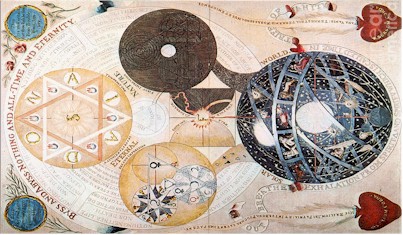
"The cosmology of Jacob Boehme", a 17th century German mystic and shoemaker, is a complex, visionary system that explains the origin of the universe as an act of divine self-revelation. For Boehme, the universe serves as a "mirror" through which God, who is initially an unmanifest unity, gains self-consciousness and self-knowledge. His cosmology describes a dynamic, mystical universe originating from a divine "Ungrund" (ungrounded abyss) that seeks self-knowledge through the tension of light and darkness. Christ embodies the central, reconciling principle that unites these opposites, transforming internal spiritual strife into divine love and bringing cosmic restoration. Core Aspects of Boehme's Cosmology and Christology: The Divine Struggle: God, in order to know Himself, produces the universe through a conflict of opposing forces (darkness/fire and light/love).
In this second section, we are going to consider the eight points below from Section One - where they were examined from the perspective of Christian Theology. However, here we are going to examine them from the perspective of Jacob Boehme's Cosmology and Christology.
In Boehme's Mysticism and Theosophy, prior to ALL else - including the "Trinity or the Manifested God" - is the "Ungrund" I find it necessary to inject here that ALL of Boehme's Mysticism and Theosophy is complex, difficult to understand and obscure - due to his disconnected and repetitious writing style, reference to obscure alchemical terms and self-created vocabulary, not to mention the very complex and unique (at least to modern minds) material being discussed. Perhaps however, the concept of the "Ungrund" may be the hardest of all to decipher. Be this as it may, it is ESSENTIAL to do so, for it is the FOUNDATION upon which ALL of the rest of his work is built. If you do not understand this concept (as Boehme uses the word), you will completely fail to or misunderstand all the rest of his writings. The First Point - The Ungrund (often translated as "unground," "abyss," "groundless ground," or "bottomless abyss") is one of the most distinctive and challenging concepts in the theosophy of Jacob Boehme. He coined or popularized the German term "Ungrund" to describe a primordial, paradoxical reality that lies beyond all being, ground, or differentiation --- yet paradoxically serves as the source from which God, the Trinity, creation, and redemption unfold. It is not a "thing" but an absolute negation ("ouk on" in Greek philosophical terms), a dynamic "Nothing" that hungers for manifestation. The Ungrund is central to both his cosmology (the origin and structure of the universe) and Christology (the nature and redemptive work of Christ), where it accounts for divine freedom, the origin of good and evil, and the necessity of incarnation and redemption. Below is a structured, multi-angle exploration. 1. Core Definition and Nature of the Ungrund Boehme portrays the Ungrund as the eternal, undifferentiated "Abyss" or "Great Mystery" (Mysterium Magnum) --- an absolute stillness, peace, and "Nothing" (das Nichts) that precedes all existence, nature, time, or even God as a personal Being. It is "its own origin and explanation; it presupposes nothing but itself; there is nothing beyond it... it is 'neither near nor far off.'" It is an "abysmal Deep" that no name can fully capture and which defies rational description in terms of space, time, or qualities. Key characteristics (drawn from Boehme's later works, especially "Mysterium Magnum"): It is absolute negation, not relative nothingness: Unlike a "matrix" or primordial matter (which Boehme later calls Salitter or "matrix" --- a relative "something" embodying divine forces like dry/sour/sweet qualities), the Ungrund is pure "ouk on" --- sheer ontological absence, a paradox that is "like an eye which sees, and yet conducts nothing." It has no essence, no locality, no beginning. Boehme explicitly shifts terminology in his mature thought to reserve Ungrund for this absolute void, distinguishing it from earlier, more relative usage. It is a dynamic "hunger" and desire: Despite being Nothing, it is not inert. "The nothing hungers after the something, and this hunger is the desire... draws itself from Abyss to Byss (vom Ungrunde in Grund)... and yet remains a nothing." This self-impressing, coagulating will creates a "Grund" (ground) without ceasing to be abyss. It is the "eternal beginning in the will of the Ungrund for a Grund." Freedom as its essence: The Ungrund is "primordial meonic freedom" --- indeterminate, irrational, and prior even to God. It is the source of all possibility, including opposition (dark/light, good/evil). "The free will is from no sort of origin, likewise upon no sort of ground is it constituted." This voluntarism (primacy of will over intellect) makes freedom deeper than being, love, or goodness. 2. Ungrund in Boehme's Cosmology (Theogony and Creation) Boehme's cosmology begins not with a pre-existent God, but with the Ungrund as the "Non-being (or Beyond-being)" from which even the Creator and cosmos arise. It is "outside of all nature," the "eternal stillness and rest, viz. the Nothing," yet it gives birth to everything through a process of self-revelation via contradiction and desire. This is a theogony (birth of God) before cosmogony (birth of the world). Theogonic process (birth of the divine): In the Ungrund's stillness, an eternal Will arises --- "a longing desire for manifestation, the eye of eternity turns upon itself." This leads to the Trinity: the Father as the dark, fiery, wrathful principle (first Principle: contracting desire, bitterness, etc.); the Son as the light, love, and heart (second Principle); and the Holy Spirit as the unifying motion. "The divine Essence in three-foldness in the unground dwells in itself, but generates to itself a ground within itself... the unground of eternity, which gives birth to itself within itself in a ground." Boehme's own concise formulation (from "Three Principles", ch. VII) makes this explicit: "The source of the Darkness is the first Principle, the virtue or power of the Light is the second Principle, and the Out-birth generated out of the Darkness by the virtue of the Light is the third Principle. The "Darkness" is NOT called "God" -- God is ONLY the Light and the virtue of the Light -- that which goes forth out of the Light is the Holy Ghost." The seven "qualities" or forms: Desire, movement, anguish, fire, light, sound, and body structure this eternal cycle, producing both harmony and strife. Creation of the universe: The visible world is a "spiration, or outbreathing" and "signature" (parable) of the inner spiritual world, which itself emerges from the Ungrund. Boehme rejects simple "creatio ex nihilo" as relative nothingness; instead, he conjoins it with "creatio ex aliquo" (from divine forces /Salitter as relative matrix). The world manifests God's self-knowledge: "If God made all things out of nothing [in the relative sense], then the visible world would be no revelation of Him." Three Principles govern reality: (1) dark/fire/wrath, (2) light/love, (3) the mixed visible world (our fallen realm). Evil arises from unchecked desire in the Ungrund's freedom (e.g., Lucifer's fall into "eternal unrest"), not as a separate principle, but as a necessary contrast for revelation: "Without the evil and the good it would have no ground upon which to be." The Three Principles and the Seven Qualities govern the creation of ALL of reality - material as well as spiritual - including the manifestation of the Trinity itself. These, along with the "Ungrund" comprise the foundation and workings of Boehme's entire Mysticism and Theosophy. It MAY (probably WILL) take considerable effort and time to comprehend and digest what he has to say, but a thorough understanding of these three topics is mandatory if you wish to do so. What is being presented here is but an outline and summary. At the end of this article are links to some of Boehme's writings which will help you to a FAR deeper understanding. 3. Ungrund in Boehme's Christology Christology is inseparable from cosmology in Boehme: the Son/Christ is the eternal "Heart of the Father," the light born from the Ungrund's dark will, resolving its tensions. The Ungrund's freedom allows differentiation and potential evil; Christ (as eternal Word/Logos and incarnate God-man) is the redemptive manifestation that triumphs over it. Eternal generation of the Son: The Son emerges as the "outspringing Joy" and "heart" from the Father's dark fire in the Ungrund. "The Father eternally generates the Son... For God to be a personal God, He must go out of Himself and find Himself in something that mirrors Him." Christ is not a second God, but the personal revelation: "The Son is the heart of the Father --- God as Person." It is of UTMOST importance that the concept of "Eternal Generation", which Boehme is outlining here, at least be FIRMLY ACCEPTED if not understood !! He states in his writings that, "being but a man, he must write in a creaturely manner" - that is - in a linear sequence of time. However, he states over and over again that what he is discussing here takes place as an "eternal generation" - apart from beginning, end, or time. It is a circular, continual, dynamic, ongoing, never-ending, unbeginning, unending sequential generation.
| |||||
|
Adam was not merely a creature, but a "perfect symbol of God," formed out of the eternal Magia (divine creative power or matrix) and the substance of God Himself, "something made out of the nothing, out of the spirit --- the ideal --- into the body." Divine intention: God longed for a visible likeness of Himself and desired "children of his own kind." Adam was meant to generate a celestial army or hierarchy to replace the fallen Lucifer and his angels, ultimately culminating in the birth of the King (Christ) from human lineage. Man was to surpass the angels in perfection, as angels were created from only two principles, while Adam incorporated all three. Process and Substance of Creation: Adam was created in Paradise (which Boehme sees as a paradisiacal earth blooming through the outward world) only unto the divine image, to the life eternal. His body was formed from the "earth of Paradise" (a pure, non-gross elemental substance, linked to the pure Element or quintessence underlying the four elements). God breathed His own life and spirit into him, making Adam's life "burning like a flame of pure oil" in a state of joy, glorification, beauty, and full knowledge. Adam's formation involved: (1.) The inward spiritual ens (essence or seed) from the divine Word and wisdom. (2.) An outward aspect drawn from the paradisiacal earth /limus (the pure elemental substance). (3.) The Fiat (divine creative command) conceiving and forming him, with God breathing the living spirit directly into him. This pre-fall Adam resembled the Kabbalistic "Adam Kadmon" or Hermetic primal man --- a heavenly, angelic-like being with a non-corporeal or subtle "angelical garment" or body of light, not yet the gross, bestial flesh of post-fall humanity. He named the creatures with names containing their very essence, showing his deep participation in divine wisdom (Sophia, often personified as his heavenly bride). Androgynous "Masculine Virgin" Nature: One of Boehme's most characteristic teachings is that original Adam was androgynous --- a "masculine virgin" or "virgin full of chastity, modesty and purity," containing both the masculine (fire/tincture) and feminine (light/Venus/matrix) principles in undivided unity. He was "a man and also a woman, and yet neither of them distinctly," but a complete image of God with both tinctures in harmonious conjunction. This virginal center was like a "beautiful paradisiacal rose-garden" in which he loved himself in divine self-enjoyment. In this state, Adam was not divided into male and female for animal procreation. Generation would have occurred in a heavenly, magical, or fiat-like manner (similar to how God creates), without the lust, division, or bestial sexuality that arose after the Fall. The heavenly Virgin Sophia (Divine Wisdom, often personified as his celestial bride or "pearl") dwelt with him inwardly. She represented the receptive, luminous aspect of divine wisdom and the soul's true nobility. Adam's union with Sophia was chaste, joyful, and generative of divine wonders rather than earthly offspring. The Third Point: Adam stood in three principles in harmonious balance within himself (though not fully manifested outwardly). He was created for eternal life in paradisiacal perfection, as lord over the earth, capable of unfolding its hidden virtues without being subjected to its fallen limitations. Before the Fall: Adam (representing primordial humanity) existed in a perfect, equilibrated state within the three eternal principles. In the pre-fall state, these three principles were present in Adam and in equal concordance within him, but not yet fully manifested or dominant outside him in a mixed, conflicted way. The dark principle did not rule nor torment; the light principle shone through everything; and the outward world bloomed as pure Paradise rather than a realm of toil, death, and gross materiality. Adam lived primarily in the second principle (the light-world), with the divine light and life flowing freely through him. His life was sustained directly by the Word of God and heavenly essence, not by earthly food in the fallen sense. He "ate" of the paradisiacal virtues and fruits that grew through the outward world, but Paradise itself effloresced (bloomed) through all things. Heat and cold, hunger and satiety, pain and pleasure were swallowed up or held in harmonious balance, like night hidden within day. Body, Soul, and Spiritual Qualities Body: Adam possessed a subtle, heavenly, "angelical garment" or body of light rooted in the pure Element (the quintessence underlying the four gross elements). It was not the heavy, bestial, corruptible flesh of post-fall humanity. This body was glorious, beautiful, and capable of penetrating or ruling the outward world without being subjected to its limitations. Boehme sometimes describes it as formed from the "limus" or pure paradisiacal earth. State of Being: Eternal life, innocence, freedom, and dominion over the earth. Adam was meant to be lord and steward, manifesting God's wonders visibly. He lived in continuous delight, with the seven qualities of eternal nature (astringency/desire, sweetness, bitterness/anguish, fire, love, sound/understanding, and corporeality) operating in balanced, creative harmony rather than conflict. There was no death, sickness, or gross labor --- only joyful unfolding and self-revelation of the divine. Adam spent a symbolic period (Boehme mentions "forty days" in some contexts) in this state, during which he was tempted but initially stood in Paradise. Boehme uses symbolic durations; the pre-fall period is not strictly chronological in a modern sense, but part of the eternal drama unfolding in time. Purpose and Cosmic Role God created Adam as a perfect microcosm and image to reveal the divine wonders in visible form and to generate a celestial hierarchy or "children of His own kind" that would restore or surpass what was lost with Lucifer's fall. Humanity was intended to exceed the angels in certain ways, incorporating all three principles fully. The paradisiacal earth was to remain a blooming garden through which the divine light and life penetrated everything. Boehme emphasizes that this state reflected God's desire for self-knowledge and manifestation through a free, willing creature. Boehme views the pre-fall state as one of blissful but incomplete innocence in a dialectical sense. Adam had both freedom of will and the potential for the dark principle to stir through imagination and desire. The original state was not static perfection, but dynamic harmony open to growth or loss through the will's direction. Psychologically and spiritually, traces of the pre-fall state remain as the inner divine spark or "pearl" that can be awakened through regeneration, "dying to the self", being "born-again" and reunion with Sophia/Christ. The Forth Point: The Fall of Lucifer as Prelude - Lucifer's Influence -- The dark world's corruption by Lucifer's prior fall already affected the outward creation, setting the stage for Adam's temptation. Adam's fall compounded this. The drama begins with Lucifer (and his legions), the highest created being. In Boehme's telling, Lucifer's fall was an act of self-will (Eigenwille) and pride. He turned from the humble, meek light of God toward the fierce power of the dark fire (first principle), seeking to "rule in the fire" and exalt himself as a god, independent of divine love. He "imaged" or imagined himself into the wrathful essences, awakening chaos. This rebellion disrupted the primordial creation: the world under Lucifer's dominion fell into "chaos and confusion." God responded by "spewing him out" and recreating/renewing the visible world (third principle) as a battleground and school for redemption. Evil, for Boehme, is not a co-eternal substance, but a perversion or disorder: the dark fire, when divorced from love's tempering, becomes hellish torment, self-consuming anguish, and enmity. The "devil" is the result of this reaction -- God's own power turned against itself through creaturely rebellion. Lucifer's fall sets the stage: it infects the "eternal nature" with imbalance, making the external world a place where wrath can predominate if unchecked. The Nature of Man's "Fall" -- The Fall occurred when Adam's imagination turned toward the mixed knowledge of good and evil in the outward world (influenced by Lucifer's temptation via the serpent), causing the heavenly tincture and Sophia to withdraw, the principles to fall out of balance, and the body to become earthly and mortal. The separation of Eve from Adam's side further externalized the division into sexes and introduced animal generation. Boehme interprets Genesis allegorically and esoterically as a spiritual process, not merely a historical bite of an apple. Pre-Fall Adam existed in paradisiacal harmony. Adam's fall differs from Lucifer's: He had access to the "tree of life" (divine indwelling, Christ/Sophia as inner power). He was "man and woman" in one (androgynous), imaging the divine. The three principles were in equilibrium within him, though the external world already carried the shadow of Lucifer's corruption. The temptation arose from the devil's "poisonous imagination" entering the human quality. Adam, granted freedom (mirroring God's own freedom in the Ungrund, the primal abyss or "unground" of divine will), allowed his lower qualities to awaken an evil desire --- a perverted longing for the "vanity" or multiplicity of the terrestrial/external world (third principle). He sought to "taste good and evil" independently, moving from unity/harmony into selfhood and division. Key aspects of the Fall according to Boehme: Imagination and Desire as the Mechanism: Sin begins in the will's imagination. The soul "imaged" itself into the earthly qualities rather than remaining in divine light. This is a turning inward to self (self-will) and outward to the mixed world. Eve (the outward, more impressionable part) was deceived first; Adam followed knowingly.
Unlike Lucifer's willful rebellion against God, Adam's was more a yielding to fascination and deception --- a desire to experience the "knowledge of good and evil" on his own terms, leading to the loss of paradisiacal innocence. God foresaw this and prepared redemption from eternity (the "Covenant" and the "Serpent-Bruiser," Christ). The Fall introduced necessary knowledge of opposites (light/dark, joy/suffering), allowing for a deeper redemption. The restored state (through Christ, the "Second Adam") will be higher than the first --- a glorified, virginal humanity in heavenly bodies, following the Lamb as "virgins" (Revelation imagery). The Nature of "Sin" -- For Boehme, it is fundamentally separation from God into selfhood --- the will departing the unity of divine love into its own "I" or ego. It is: Self-will vs. God's Will: The creature asserting independence, turning the "Yes" of love into the "No" of contraction and egoism. This creates inner enmity: "the life of man is at enmity with itself."
Boehme emphasizes that God creates only good; evil arises from the creature's misuse of the eternal powers. The Fall introduced bestial elements, disease, and death, but also the possibility of a higher redemption through struggle. Boehme's view is dialectical and optimistic in the long term. The Fall is tragic yet serves divine self-knowledge: through opposition (dark/light, self/God), love manifests more gloriously. Man is both Adam (fallen) and potentially Christ (regenerate) in one. Every soul must reenact the reversal internally --- killing self-will, entering the "new birth" in Christ's life, pressing the soul back into the light principle. Not all are equally fallen; persistent refusal of grace can lead toward a "devilish" state. Yet God's mercy recalls humanity immediately (the promise in Eden). The external world limits total collapse into pure darkness. Boehme links this to alchemy (transmuting wrath into love), astrology /planetary influences (the "stars" as powers affecting the fallen state), and the "Signature of All Things" (outward forms revealing inner spiritual realities). His ideas emphasize inner transformation over external law or works. Salvation is not forensic but regenerative --- a real entering into Christ's victory (who reversed the temptation). Prayer, resignation of self-will, and the "earnest purpose" to turn inward allow the hidden divine life to unfold. In summary, Boehme portrays the Fall not as arbitrary punishment but as a consequence of freedom's misuse within a dynamic divine process. Sin is the soul's self-assertion into multiplicity and darkness, fracturing harmony and subjecting humanity to a mixed, toilsome world. Yet this "lamentable" state carries the seed of return: the indwelling Christ/ Sophia, through whom the soul can be reborn into unity, joy, and a higher paradise. His vision invites deep introspection --- every person relives Adam's choice daily.
|
|
His pre-fall state embodied the balanced "temperature" of qualities in paradise. The temptation --- stirred by Lucifer's prior fall and the serpent's subtlety --- involved Adam turning his imagination toward the knowledge of good and evil, lusting after the outward, differentiated, earthly realm rather than abiding in God's unity. This "horrible, lamentable and miserable fall" (as Boehme titled a key section in "Concerning the Three Principles of the Divine Essence") had layered repercussions. Boehme explores these from multiple angles: spiritual, anthropological, natural, and cosmic. He emphasizes process, dialectic (dark/light, wrath/love, unity/multiplicity), and the possibility of redemption through Christ as the "Second Adam." The Fall is tragic yet participates in a larger divine self-revelation, where suffering and opposition allow for deeper knowledge of good through contrast (though Boehme stresses it was not God's direct intent but a permitted consequence of freedom). For Adam Himself Adam's personal fall involved a profound degradation of his original divine image and constitution: Loss of paradisiacal harmony and androgyny: Pre-fall, Adam was a complete, celestial being --- neither strictly male nor female in the earthly sense, with his "tincture" (vital spiritual essence) united to the heavenly Virgin (Sophia). His body was subtle, spiritual, and transparent to divine light, not gross matter. Upon falling, the heavenly virgin-like chastity "died"; he became divided, and a deep sleep fell upon him, from which Eve was formed as a separate being. This introduced sexual differentiation, bestial propagation (with "bestial members" for reproduction), and shame. The soul's fiery tincture mixed improperly with earthly desires. Imprisonment in earthiness and the third Principle: Adam's imagination shifted from divine unity into self-will and the "out-birth" (the mixed, temporal world). His celestial body became "terrestrial, faint, and feeble"; the outward elemental body (a "worm's-carcass" or gross flesh) dominated, subjecting him to hunger, pain, corruption, and death. The divine image was eclipsed or "disappeared," covered by an earthly image. He lost direct paradisiacal dominion and understanding (Verstand), falling under the sway of astral influences, elements, and the knowledge of good and evil (now experienced as opposition and torment rather than harmonious wisdom). Subjection to wrath, sin, and inner conflict: By exciting the dark qualities through perverted desire, Adam kindled the "wrath of God" (not as punitive anger from an external deity, but the awakened fire/anguish of the first Principle within nature and himself). He became captive to the serpent's property (symbolizing sexuality, subtlety, and brutish lust), introducing unchastity, vanity, and a "monstrous shape." The soul now dwells in a "dark dungeon" of the outward body, yearning for redemption, yet prone to further imaging of itself into multiplicity and selfhood. Boehme describes this as a breaking of the will from divine unity into selfishness, leading to fear, nakedness (spiritual poverty), and hiding from God. Nuances: Boehme does not see Adam as wholly evil or predestined to damnation. The Fall awakened awareness of opposites, potentially enriching consciousness if overcome. However, without regeneration, it leads to eternal imaging in the dark world. Edge case: If Adam had not fallen, he might have remained in "blissful ignorance" of the lower qualities, but the Fall (coupled with Lucifer's) made experiential knowledge of suffering and redemption possible. For Humanity as a Whole The repercussions extend universally through inheritance and the shared human essence: Corruption and mortality propagated: All descendants inherit Adam's "earthly image" and the divided state. Humanity is now subject to corruption, sin, death, bestial lusts, and the dominance of the outward world. The soul lies captive, often imagining itself into vanity, with the divine spark (the "tinder" of the faded image) dimmed but not extinguished. Birth brings misery --- naked, helpless, in "deepest poverty" --- contrasting the original perfection. Sexual propagation carries the serpent's ens (essence), amplifying unchastity and generational transmission of the fall. Division, conflict, and subjection to principles: Humanity fragments across the three Principles: potential for light (regeneration), darkness (wrath/hell), and the mixed temporal realm (where most live). Inner multiplicity arises --- contending wills, properties out of "temperature" (balance) --- leading to self-division, suffering, and the need for constant choice between dark and light. The "whole of creation groans" in a sense, but humanity bears special responsibility as the microcosm meant to unite principles. Path to redemption and new birth: Boehme emphasizes hope -- the promise of the "Seed of the Woman" (Christ) treads on the serpent. Regeneration recreates the divine image through Christ, restoring the heavenly substantiality (a new eternal body) hidden under corrupt flesh. This requires dying to the old Adamic self-will, re-imagining into divine love, and participating in the alchemical/spiritual process of the seven qualities toward harmony. Every person is potentially both Adam (fallen) and Christ (regenerated); the Fall makes the drama of redemption necessary and meaningful. Implications include Boehme's call to inner contemplation over external ritual, influencing later mysticism, Romanticism, and even psychological ideas of the unconscious abyss (Ungrund). Nuances and edge cases: Not all are equally damned; the light principle remains accessible. Boehme's view challenges simplistic original sin doctrines by framing it dynamically within eternal nature's processes. For humanity, the Fall introduces history as a redemptive process, culminating in restoration, where saints might dwell in a renewed paradise-like state, though vigilance against relapsing remains. For the Cosmos in General Boehme's vision is thoroughly cosmological --- the Fall is not isolated but perturbs the entire created order: Manifestation and "creation" of the outward world: The visible universe as we know it (stars, elements, time-bound nature) largely arose or became grossly manifest through Adam's fall (building on Lucifer's prior corruption of primordial creation). It serves as a "third Principle" of reparation --- a mixed arena where dark and light contend, allowing manifestation of divine wonders that might otherwise remain hidden. Pre-fall, creation existed spiritually in God's wisdom; post-fall, it densified into antagonism. The four elements, once in harmonious "temperature" as one composite, now stand in mutual opposition, producing storms, earthquakes, poisons, and cycles of violence/calm. Evil preponderates in appearance because wrath (excited by fallen wills) overpowers love temporarily. Disruption of eternal nature's harmony: The seven qualities (astringency, sweetness, bitterness, fire, etc.) lost their balanced "temperature," leading to a world "powerfully qualified in wrath, acting like a poison." Nature groans under the curse; darkness gains power through perverted desires. Lucifer's influence intensifies in the dark element. The cosmos becomes a stage of struggle, where the "wheel of anguish" drives evolution toward light, but at the cost of suffering. Broader implications and teleology: The entire creation is dragged down yet oriented toward restoration. Humanity's role is pivotal --- through regeneration, the microcosm aids the macrocosm's return to order. Ultimately, all things will be restored (with Christ as Lord of Creation), ending time when the divine image is fully manifest. Boehme's theogonic/ cosmogonic process portrays God self-revealing through tragedy and freedom, not static perfection. The Fall makes the universe a dynamic "play" of opposites, where freedom's misuse births evil, but divine love (via Incarnation) conquers it. Edge cases: Without the Fall, the lower qualities and outward world might not have unfolded experientially; the devil becomes an unwitting "benefactor" by introducing contrast, provided humanity overcomes rather than succumbs. Related considerations: Boehme's system integrates alchemy (transmutation of qualities), astrology (influences on the fallen state), and a non-literal reading of Genesis as eternal processes manifesting in time. It influenced figures like Blake, Hegel, and Schelling, offering a theodicy where evil arises from freedom within the Ungrund (abyssal groundlessness) rather than divine fiat. Critiques note its complexity, potential pantheistic leanings, or deviation from orthodox views, yet it provides a holistic framework linking personal sin to cosmic drama. In summary, for Boehme, Adam's Fall ruptured unity, densified spirit into matter, awakened wrathful opposites, and subjected all to corruption and process --- but it also opened the possibility of a richer, conscious return to divine harmony through Christ. This multi-layered view invites ongoing inner work: discerning the principles within oneself, reorienting imagination toward light, and participating in cosmic redemption. His writings reward deep study, as surface readings miss the dialectical depth. Primary sources like "Three Principles", "Mysterium Magnum", and "Signature of All Things" elaborate these ideas with Boehme's characteristic visionary, repetitive, and symbolic style. God's Provision: The Covenant and the Incarnation of Christ Immediately after the fall, God did not abandon humanity. In Boehme's reading of Genesis 3 (the proto-evangelium), God promised the "Seed of the Woman" (the Serpent-Bruser or Bruiser of the Serpent) as a helper and savior. This was the Covenant --- the Word of God (the divine power and love) entering into the disappeared or poisoned heavenly ens in Adam's line, propagating through the generations (especially the line of Seth) as a hidden promise until its fulfillment. The core provision is God's self-giving in Christ: The eternal Word (the Son, the Heart of God, the Light) freely gave itself again into humanity's corrupted essence. This culminated in the incarnation: The divine Virgin Sophia reunited with humanity through the Virgin Mary (seen as a restored or parallel virgin vessel). Christ, as the true heavenly man and Second Adam, was born with the full divine tincture of love-fire. In Christ, the lost heavenly image, the balanced Temperature, and the union with Sophia are perfectly restored. He conquers the three temptations (corresponding to the principles), suffers in the wrath (the dark fire), dies to the self-will and earthly image on the cross (the "T" as a symbol of humility and the slaying of death), and rises in a glorified, paradisical body. New Life: The regenerate person becomes a "temple of God," speaking with God again, manifesting divine virtues. The outward body remains in this world but is increasingly signed by the inner reality. This is the "Philosopher's Stone" analogy: transmuting base (fallen) into gold (divine). Christ's work is not primarily a legal payment of debt (though Boehme acknowledges wrath and justice) but a real, alchemical-like transmutation: He reintroduces the "Love-Fire" and "Tincture of Light" into the human root (the soul's fire). He breaks the power of the serpent (the devil's ens or imagination) and the dominance of the third principle's corruption. Through His victory, the divine essence can once more "tincture" (penetrate, transform, and spiritualize) the soul and, ultimately, nature itself. The Seventh Point - Restoration for Humanity: The New Birth and Regeneration Boehme stresses this is a process involving suffering (the cross), daily dying to self, and growth --- not a one-time event. It mirrors alchemical stages: putrefaction (death to old man), separation, conjunction, and resurrection. Immediately after the fall, God spoke the Covenant (the "seed of the woman shall bruise the serpent's head" --- Genesis 3:15), planting the name and power of Jesus (the eternal Word) into Adam's tincture/soul as a hidden spark or root. This was not abstract but a real implantation of divine life into the weakened celestial essence. The full restoration unfolds in multiple layers, mirroring creation's process but in reverse (regeneration as a new "birth" or alchemical transmutation): Christ as the Second Adam: The eternal Word (Heart of God, Sophia's Bridegroom) became incarnate in Mary, who carried the restored virginal essence. In Christ's life, temptation in the desert, suffering, death, and resurrection replayed and reversed Adam's process: perfect obedience where Adam faltered, bruising the serpent inwardly. Christ's victory re-tinctured humanity with divine love-fire, reawakening the disappeared heavenly Ens. For individual humans, restoration is not automatic or forensic but participatory: The New Birth / Regeneration in the Individual: This is the "actual process" Boehme emphasizes for every person. It is not forensic justification alone but a real, experiential transformation of the old Adamical man into the new Christ-man: Repentance and Resignation: Dying to self-will, the "old Adam" (fiery, self-seeking soul). Turning the will fully to God, breaking the imagination's attachment to earthly desires, and the stirring of Christ within (the "cornerstone" in the extinguished image). Faith as Imagination: The soul must hunger, desire, and imagine Christ intensely. The divine spark (the Covenant/Jesus-name in the soul) is kindled by the Holy Spirit. Tincturing and Union: Christ's light/love-fire enters the soul's dark root, purifying the "tincture" (essential quality). The soul is "tinctured" with love, turning wrath into meekness, anguish into joy. Sophia returns as the inner Bride; the divided male/female is reunited in "virginal manhood" --- a spiritual androgyny or wholeness in Christ - enabling the new birth in the second principle (the light-world). The regenerated person becomes a "branch on the jeweled tree of Christ," bearing celestial fruit. This restores the divine image, the androgynous spiritual unity (in essence, beyond male/female), and participation in the heavenly paradise even while in the body. Boehme stresses that this is an inner process of essential change --- not mere belief or external works. The soul must pass through the fire (anguish, trial) to reach the light. Edge cases include those in whom the divine spark remains deeply hidden or overpowered by wrath; yet God's mercy and the universal presence of the Word mean restoration remains possible. Nuances and implications: Process over instant fix --- Restoration unfolds through history, covenant, incarnation, personal regeneration, and eschatological transmutation. Suffering and the knowledge of opposites serve a pedagogical purpose. Critique of external religion --- Boehme warns against relying on outward forms, sects, or "Babel" (confused opinions) without the inner tincture of Christ. True restoration is theophanic --- God manifesting through the renewed human. Alchemical parallels --- Boehme frequently uses language of tincture, fire, coagulation, and transmutation, framing redemption as a real change of essence, NOT just declaration. In summary, Boehme teaches that after Adam's transgression, God's provision was the eternal Covenant of the Seed fulfilled in Christ, who re-implants the divine Love and Light into humanity's poisoned root. This enables the new birth (restoring the heavenly image and Sophia) for persons and points toward the full regeneration of creation --- turning the mixed, wrath-tinged third principle back toward divine harmony. It is a profound, multi-layered drama of divine self-giving, human freedom, and cosmic renewal, where love ultimately tinctures and overcomes the fire of wrath. Boehme's writings (especially "Three Principles of the Divine Essence", "Mysterium Magnum", "The Way to Christ", and "Threefold Life of Man") develop these ideas with rich symbolism, biblical exegesis, and visionary depth. They reward careful reading, as his language is often parabolic and experiential rather than strictly systematic. For those exploring further, the process of inner resignation and the stirring of Christ/ Sophia within is presented as the practical path to tasting this restoration now. The eighth Point - Eternal Results of the RestorationRegeneration Today: The path back involves turning the will toward the light, allowing the "noble Virgin" (Sophia) to reappear to the soul, and being reborn in Christ. Modern humanity lives in the third principle as captives, with the soul in a "dark dungeon," yet the divine covenant and spark persist. Eternally: restoration through Christ (the Word/Heart of God entering humanity) rekindles the divine light in the soul, regenerates the weakened heavenly image/ essentiality, and brings the soul back into the second principle of eternal light, love, and life. Key outcomes include: Regeneration/New Birth: The soul, which "died" to the celestial kingdom in Adam (losing full participation in divine essentiality /light), is quickened again. Christ, as the "tincture" of love and the name Jesus implanted even at the Fall, enters the soul's tincture. This awakens the inner man, slays the serpent's head (selfish terrestrial will and wrath), and births a new will aligned with God's. The believer becomes a "good tree" bearing heavenly fruit; the old Adam dies as Christ arises within. In the reborn, "all that is temporal disappears and only the heavenly part remains for all eternity." Union and Harmony: The soul returns to the "eternal Sabbath of Rest," the Temperature/harmony of properties. The divided tinctures (masculine/feminine loves) reunite. Sophia (divine wisdom/virgin) is restored as the soul's bride. The soul enters the "eternal body of Christ," where divinity has become creatural yet omnipresent. This yields eternal joy, meekness, crystalline transparency, and participation in the divine wonders without enmity. Victory Over Wrath and Hell: The light shines again into darkness; death dies in death (on the Cross, Christ tinctures death with life). Wrath/hell becomes a "plague" rather than eternal dominion for the regenerate. The soul, rooted in the eternal fire-principle, is illuminated and turned from anguish to "humble lovely mirth in meek joy." Eternal perdition is avoided only by this divine aid; without it, humanity would be lost eternally. Broader Cosmic Redemption: Creation's wonders (rooted in time) are brought back into eternity. The process allows God a fuller self-revelation through differentiation, conflict, and reconciled harmony --- more profound than original innocence. The regenerate participate in this as branches of the eternal Life-Tree (Christ), whose stem Adam was meant to be. In Boehme's view, this is not mere forensic justification, but an essential, alchemical-like transmutation: the soul's fire is tinctured by divine love, turning base qualities into gold-like divine substance. The historical Christ manifests the eternal Christ-process; true Christianity requires Christ born personally within. Temporal Results of the Restoration Temporally (in this life and the outward third principle), restoration is partial and processual, involving ongoing battle rather than immediate escape from the fallen world. Boehme emphasizes that the outer Adamic man persists alongside the inner: Inner Mastery Over Outer: The regenerate live "in Paradise according to the inner element" while in the body, provided they surrender to God's heart and do not yield to malice. They master the Adamic body rather than being ruled by it. The new birth allows one to "live above" the plane of the old sinful Adam, maintaining gravitation in God. However, full riddance of the "old Adam" (with its bestial tendencies, heat/cold, sickness, and elemental subjection) is not possible in terrestrial life; the outer clings to the inner, manifesting the "external mystery" or mirror of wonders. Suffering, Temptation, and Growth: The third principle remains a realm of trial, where the regenerate must wrestle with the dark qualities, self-will, and the world's turba. This includes: the Cross --- dying to self, resignation, and pressing the soul into Christ's life. Temporal life becomes a field for bearing fruit (sometimes devoured by "swine"), self-sacrifice, and alchemical refinement. The powers of eternity work through time like the sun through water. Disease, opposition, and the mixed good/evil of nature persist but are transfigured in meaning; they serve the process of revealing divine qualities through contraries. Manifestation of the Divine in the World: The restored inner light illuminates the outer, allowing the "wonders of eternity" to be brought into time. The Church or community of the regenerate acts as a budding of the new creation amid the old. Historical events (e.g., the Covenant with Adam post-Fall, propagated through Seth's line to Mary) prepare and manifest this temporally. Nuances: Not all attain full regeneration in this life; many remain in the "dark stable," groping externally. Hypocrisy, external laws, or works without the inner Christ avail nothing. The process requires earnest resolution, hunger for God's bread/Word, and passing through "hell" (confronting the dark principle) first. Boehme's rejection of simplistic penal substitution; atonement is the Love/Heart of God becoming human to tincture and regenerate from within. He integrates Lutheran emphases on grace with a mystical, experiential "inner way."Edge cases: Boehme affirms free will in the soul's center (it stands at two gates --- light or dark), yet stresses divine initiative in the Covenant and Incarnation. Predestination themes appear in his Election of Grace, but regeneration remains open through Christ's universal tincture. Full eschatological consummation (time ending, all restored) lies beyond temporal life, when the outer fully yields to the inner. Boehme warns against Antichrist (self-pleasing in the third principle) and stresses that the soul builds its eternal house by what it sows here --- good or evil desires shape the tincture permanently. For the unregenerate, temporal life ends in the dominance of wrath; for the regenerate, it transitions into eternal glory. Implications and Related Considerations Implications for ethics: continual self-denial, imagination fixed on God, and living as if the inner Christ rules the outer self. For creation, the visible world is not discarded, but rather penetrated and redeemed by the eternal. Boehme views the Fall not as unmitigated disaster but as part of a dynamic divine process: without knowledge of contraries (good/evil, light/dark), primordial bliss would lack full depth or self-awareness. Restoration elevates creation toward a redeemed harmony richer than the original --- God achieves fuller expression through the "fortunate" aspects of differentiation and return. This has alchemical, psychological, and cosmological layers: the soul's inner alchemy mirrors cosmic repair (our world as a "third principle" fixing Lucifer's ruin). In summary, Boehme portrays Adam's (and creation's) restoration as a profound theosophical drama: eternally, it reestablishes divine sonship, light, and joyful unity in Christ; temporally, it initiates an inner-outer battle yielding partial paradise amid suffering, culminating in the victory of the new birth. This process reveals God's love as the conquering tincture that turns death into life and multiplicity back into harmonious divine self-expression. His works ("Three Principles", "Mysterium Magnum", "Threefold Life", "Regeneration") elaborate these ideas with symbolic depth, urging readers to seek the Christ within rather than external forms alone.
|
|
Click HERE to read a summary of the major points from Basarab Nicolescu's book, "Science, Meaning, and Evolution: The Cosmology of Jacob Böhme" Click HERE to read a summary of the major points regarding The Cosmolology of Jacob Böhme" Click HERE to read a summary of the major points regarding The Christology of Jacob Böhme" Click HERE to read a summary of the major points regarding "A Comparison Between Jacob Boehme's Christology and Modern Christian Views" Click HERE to access a collection of videos and various writings of Jacob Boehme Click HERE to read: Chapter Six, "Jacob Boehme and the Evolution of Man", Lucifer's Action: Contemporary Resonances - |


