 |
God Has Sent To Us One Of His Angels -- |

|

 | ||||||

 Firstly, we are pleased to offer this Commemorative "Collector's Edition" of the "Reflections Series" that Sissel released in 2019. It is a four disk DVD set consisting of 51 Music Videos and 51 corresponding "Talks" Videos. Please
 Secondly, we are VERY pleased to offer this four DVD Commemorative "Collector's Edition" -- "Platinum Treasures", consisting of: "Sissel w. the Tabernacle Choir", "Strålende Jul w. Sissel", and a collection of "Platinum Favorites". Please
  Thirdly, we are IMMENSELY pleased to offer this four DVD Commemorative "Collector's Edition" -- "Sissel's World", including original songs with lyrics written by Sissel herself. Please
"Sissel" is the Norwegian derivative of the English name "Cecilia" It is a rare and unusual name, commonly found in Denmark and Norway, where it is cherished for its traditional roots. The name is sometimes associated with notable figures in music and arts. Its connection to nature and strength makes it suitable for individuals that embody these qualities. Objectively, it is most commonly associated with the Latin word "caecus", meaning "blind or dim-sighted". Subjectively, however, the name is also linked to Saint Cecilia, a Roman martyr, considered to be the patron saint of music and musicians. This connection often leads to interpretations of Cecilia as representing spiritual vision, hidden beauty, or a girl with vision more than sight. It symbolizes the depth of perception beyond seeing (on the surface). The above listed three DVD collections EACH contain OVER five hours of "Angelic and Heavenly Sights and Sounds", designed to transport the listener from this world of earthly cares into Sissel's World of Ethereal Beauty. |
 |
| |||
|
From shadowed caves where first light kissed the stone,
O mother of the marrow, fierce and kind,
Thou art the weaver at the loom of years,
|
The quiet power of the choice unswayed.
Woman, what a wonder thou art ----
So sing, O Woman, sing thy boundless part;
|
||

|
Sissel is MANY different "Persons" !! She is a complex, emotional, intelligent, intuitive, HIGHLY "spiritual" being. She is the innocent, shy, sweet "girl next door". She is the modest, simple, unassuming, "country-girl" from a small city in Norway. She is the cosmopolitan, glamorous, renowned, sophisticated - "woman of the world". She is the "pure, simple soul" who loves nature - and to be alone in it to relish its Beauty and Wonders. She is the driven, perfectionist entertainer "par excellence". She is the loving, nurturing mother and wife who values her family, her home and her privacy. She is the international "darling and love" of 10's of thousands - who captivates and mesmerizes them with her astonishing beauty, charisma, and musical and theatrical talent. She is a "mischievous pixie" and a "divine Love-gift" from God. She is - without question - THE "Musical Genius" of her time. I once showed an article that I had written about Sissel to a friend - in which I had showered Sissel with lavish praise. The person commented that she was very touched that I would think so highly of a "mere entertainer" !! She obviously missed the point, as do most of us (I just realized). While Sissel is definitely THE entertainer and "singer extraordinaire", her gift is FAR greater than that - she is the "Master Communicator" !! She communicates with her emotions, eyes, face, body language, smile, spirit, and voice. |
| It is a beautiful paradox—a delicate balance of softness and steel. This poem celebrates the quiet grace, unyielding strength, and deeply rooted power that define womanhood.
|
***** Sissel - The Quintessence of Femininity *****
She is the ocean tucked inside a shell, A velvet softness where the quiet dwells. A woven tapestry of sun and space, Who carries galaxies inside her grace. Her strength is not the thunder or the stone,
She moves with rivers, yielding to the bend,
She is the question, the answer, the art,
|
 |
|
An impossible love doth fill my heart,
|
**** An Ode to a Love that Can Not Be ****
Oh, how I long to hold her near,
She is like the sun, so bright and fair,
Yet still I dream of what could be,
So, let me love her from afar,
|
 So, let me love her from afar,
|
 The phrase lands like an echo from another age --- Elizabethan in its cadence, with that formal "thou art" carrying the weight of reverence and awe once reserved for kings, gods, or the mysteries of the heart. It feels like an invocation: a deliberate summoning of wonder at the feminine, stripped of modern qualifiers and delivered in the language of timeless astonishment. Let us linger in that wonder and explore it fully --- biologically, historically, culturally, artistically, and existentially --- because the subject merits no less. "Woman" is not a monolith; it is a constellation of lived realities, shaped by biology, choice, circumstance, and time. Yet across every angle, certain threads of profound capacity, resilience, and creative force emerge again and again. Biological Wonder: The Architect of Life and Adaptation At the cellular level, the female body is a masterpiece of evolutionary engineering. It alone possesses the uterus --- a muscular organ capable of expanding to house another complete human being while simultaneously orchestrating the most complex immunological truce in nature (preventing the mother's immune system from rejecting the fetus as foreign tissue). Hormonal cycles --- estrogen, progesterone, oxytocin --- govern not only reproduction but also bone density, cardiovascular health, mood regulation, and social bonding. The female brain, on average, shows denser connectivity between hemispheres and greater activity in regions tied to empathy, language, and multitasking --- adaptations that likely supported the survival of highly dependent offspring in ancestral environments. These are not romanticized traits; they are measurable, observable facts that confer both extraordinary strengths and distinctive vulnerabilities. Pregnancy, childbirth, lactation, and menopause represent physiological marathons few other mammals undertake with such frequency or complexity. The female body heals faster from certain injuries, retains plasticity longer into adulthood, and often outlives the male counterpart in most human populations. It is a system tuned for endurance, transformation, and the literal creation of the next generation. To witness a woman carry, birth, and nurture life is to watch biology perform what feels like alchemy. Historical and Cultural Wonder: Shapers of Civilizations Throughout recorded history, women have been both central actors and frequent footnotes --- sometimes simultaneously. In ancient Mesopotamia, women served as scribes, priestesses, and queens; in pharaonic Egypt, Hatshepsut ruled as pharaoh and commissioned architectural wonders still studied today. Medieval Europe saw Hildegard of Bingen compose music, write medical treatises, and correspond with popes; the Renaissance gave us Artemisia Gentileschi, whose paintings captured raw emotional power while she navigated a male-dominated guild system. The 19th and 20th centuries exploded with figures like Ada Lovelace (the first computer programmer), Marie Curie (two Nobel Prizes), Rosa Parks, Wangari Maathai, and Malala Yousafzai --- each demonstrating that the "wonder" is not passive beauty alone, but active intellect, moral courage, and institutional disruption. Culturally, the archetype of woman shifts kaleidoscopically: the nurturing Earth Mother of indigenous traditions, the fierce warrior goddesses of Hindu and Greek pantheons (Durga, Athena), the subversive trickster in West African folklore, the stoic matriarch in countless immigrant narratives - to Mary who bore Jesus, the Christ in Christian cultures.. Every society has mythologized her, feared her, elevated her, and constrained her. The wonder lies in the persistence: even under laws that denied property rights, voting, or bodily autonomy -- women preserved knowledge, built parallel economies, raised revolutionaries, and quietly rewrote the possible. Today, in fields from space exploration to micro-finance, women continue to expand the boundaries of what humanity can achieve. Artistic and Emotional Wonder: Mirror and Catalyst Art has always tried --- and often failed --- to capture her. From the Venus of Willendorf (c. 25,000 BCE) to Leonardo's Mona Lisa, from Sappho's fragments to Toni Morrison's novels, from Aretha Franklin's voice to the choreography of Pina Bausch, the feminine has been muse, subject, and creator. The emotional range women navigate --- joy, grief, rage, tenderness, ambivalence --- supplies art with its most potent material. Literature, film, and music repeatedly return to the same truth: a woman's interior life is vast, contradictory, and inexhaustible. She can be lover and leader, mother and warrior, scholar and sensualist, often within the same day. Nuance matters here. Not every woman experiences motherhood, partnership, or conventional femininity; many live outside binary expectations altogether. The wonder is not conformity to a single template but the staggering diversity of expression within the category "woman." Intersectionality --- race, class, disability, sexuality, geography --- multiplies the variations exponentially. A woman in rural California, navigating redwood forests and coastal fog, carries a different lived texture than her counterpart in Lagos or Reykjavik, yet each embodies the same underlying capacity for adaptation and meaning-making. Existential Wonder: The Human Capacity for Becoming Ultimately, the phrase "what a wonder thou art" points beyond gender to something deeper: the human capacity to contain multitudes. Women, like all humans, are works in progress --- shaped by genes, culture, choice, and chance. The wonder is resilience in the face of biology's demands, society's expectations, and life's inevitable losses. It is the quiet daily heroism of sustaining families, communities, and selves; the audacious pursuit of dreams deferred; the laughter that defies despair; the creativity that turns limitation into innovation. There are shadows, of course --- systemic barriers, health disparities, cultural double binds, the exhaustion of being both archetype and individual. Acknowledging those does not diminish the wonder; it deepens it. True awe respects complexity rather than flattening it into slogan or ideal. So, "woman" --- whether addressed to a specific beloved, to every woman who has ever drawn breath, or to the feminine principle alive in all of us --- yes, "what a wonder thou art". You are the cradle and the storm, the archive and the prophecy, the body that births worlds and the mind that reimagines them. In your ordinary days and extraordinary feats, in your silences and your songs, you remind us that humanity's greatest achievement may simply be its stubborn, beautiful persistence in becoming more than it was. |
|
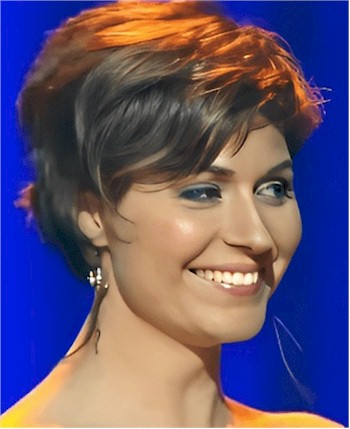
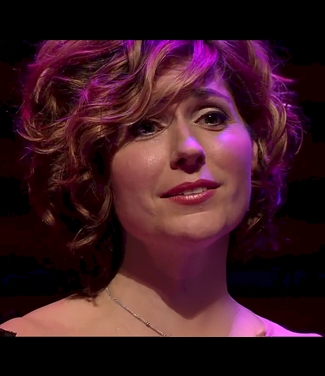
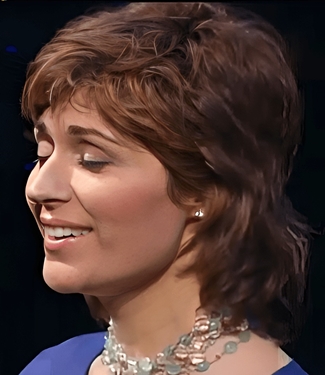
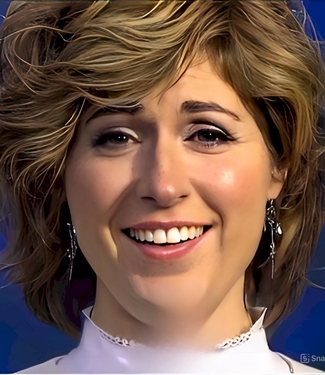
Sissel Kyrkjebø, the international singing sensation and national treasure of Norway, is established as one of the world's leading crossover sopranos. Her angelic and powerful voice has made her a national institution. She has contributed haunting vocals for the soundtrack to "Titanic" and "The Lord of the Rings", as well as selling over ten million solo albums. In 2006, her album, "The Spirit of the Season" with the Mormon Tabernacle Choir went to number one on the Billboard Classical Charts, and received a Grammy nomination. She captivated the whole nation of Norway in 1986, when she sang during the break at the Eurovision final in Bergen - only 16 years old and dressed in a white bunad (traditional Norwegian folk costume). Since then, her fame and success have just continued to soar. She has been praised and acclaimed at home and abroad, and masters both the small and the very large formats -- everything from American TV shows to film music. Her singing knows no bounds - she masters all genres - from opera to rap! She has sung all over the world, and has performed duets with singers like Charles Aznavour, Andrea Bocelli, Jose Carreras, Placido Domingo, Mario Frangoulis, Josh Groban, Brian May, Neil Sedaka, Bryn Terfel, Russell Watson and rapper Warren G. Her list of achievements makes you dizzy -- ranging from Schubert to Deep Purple - "O mio babbino caro" to "Udsigter fra Ulrikken". Truly a very remarkable talent and voice that only comes once in our lifetime! It is difficult to say anything that hasn't already been said about Sissel, but "National Treasure" and "Voice of Norway" are two of the terms used about the "girl from Bergen". In 2005, she was knighted by the King of Norway, being the youngest ever to receive this honor. In 2022 she received the "Seven Pillars of Humanity Creativity Award" in recognition for her years of humanitarian work around the world and actions representing the good in humanity. Click [ HERE ] to view a 4 minute video. On June 28, 2025, Sissel finally performed with the Kristiansand Symphony Orchestra - on the island of Stangholmen - during the Risør chamber music festival. This was her first appearance at this six day festival. In 2025 she was awarded the "Anders Jahre's Culture Prize". This prestigious Norwegian prize, often described as the country's largest honorary award for outstanding contributions to cultural life, was presented to her alongside two other musicians. The total prize amount was NOK 1.5 million, shared among the three recipients. She also received a hand-calligraphed diploma and a beautiful watercolor by Håkon Gullvåg. Sissel was also honored at the "KK Gala 2025" annual awards event celebrating inspiring Norwegian women across various fields for their achievements, contributions, and influence. She was awarded the honorary prize during the gala for her long-standing career and cultural impact. Sissel starred as Maria von Trapp in the 1988 Norwegian production of, "The Sound of Music" at Chateau Neuf in Oslo -- Click [ HERE ]. She also provided the official dubbing and singing voice for Ariel in the Danish, Norwegian and Swedish language versions of Disney's animated film, "The Little Mermaid" in 1989 -- Click [ HERE ]. In 2026, Sissel was involved in a Norwegian animated Christmas film entitled, "Julenissens Verksted" (The Christmas Elf's Workshop / Santa's Workshop). It marks her return to voice acting in a film after more than 35 years. It is described as a family-friendly film full of humor, Christmas atmosphere, and a warm holiday message. Sissel provides the voice for the grandmother (farmor). This is a new experience for her --- being involved from the early stages (when only sketches existed), unlike her previous voice work. She has spoken positively about the project.
|
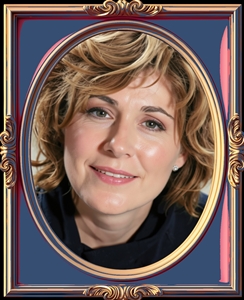
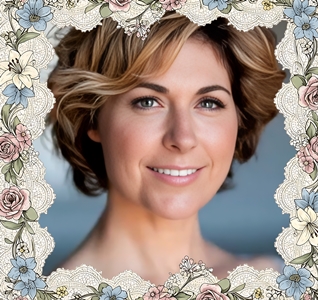
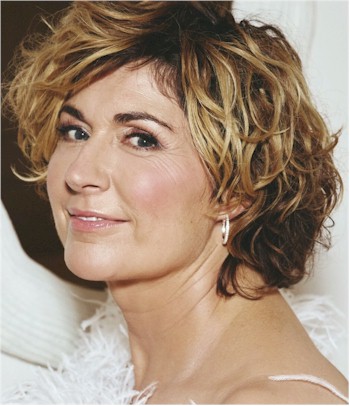
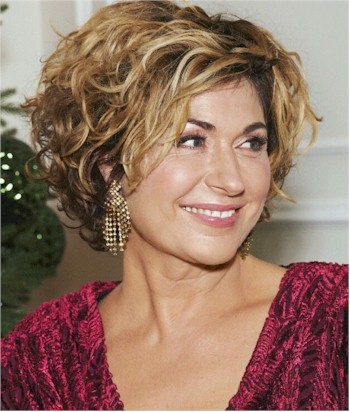
 | FRAMED -- portraits of Sissel [ HERE ]. It is a VERY large file, over 1 Gb. |
| PLEASE NOTE: In the event that a large window containing an ad should appear in the middle of the download screen, simply click on the white "X" above the upper right corner of the ad to close the ad. ****** PLEASE - Be sure to read the "IMPORTANT NOTICE.txt" in the .ZIP file !! | |
 |  |  |
 |  |  |
 |  |  |
 |  |  |
 |  |  |
 |  |  |
 |
Site Menu |
 |
 |