 |
God Has Sent To Us One Of His Angels -- |

| |||
| |||


 | ||||||

 Firstly, we are pleased to offer this Commemorative "Collector's Edition" of the "Reflections Series" that Sissel released in 2019. It is a four disk DVD set consisting of 51 Music Videos and 51 corresponding "Talks" Videos. Please
 Secondly, we are VERY pleased to offer this four DVD Commemorative "Collector's Edition" -- "Platinum Treasures", consisting of: "Sissel w. the Tabernacle Choir", "Strålende Jul w. Sissel", and a collection of "Platinum Favorites". Please
  Thirdly, we are IMMENSELY pleased to offer this four DVD Commemorative "Collector's Edition" -- "Sissel's World", including original songs with lyrics written by Sissel herself. Please
"Sissel" is the Norwegian derivative of the English name "Cecilia" It is a rare and unusual name, commonly found in Denmark and Norway, where it is cherished for its traditional roots. The name is sometimes associated with notable figures in music and arts. Its connection to nature and strength makes it suitable for individuals that embody these qualities. Objectively, it is most commonly associated with the Latin word "caecus", meaning "blind or dim-sighted". Subjectively, however, the name is also linked to Saint Cecilia, a Roman martyr, considered to be the patron saint of music and musicians. This connection often leads to interpretations of Cecilia as representing spiritual vision, hidden beauty, or a girl with vision more than sight. It symbolizes the depth of perception beyond seeing (on the surface). The above listed three DVD collections EACH contain OVER five hours of "Angelic and Heavenly Sights and Sounds", designed to transport the listener from this world of earthly cares into Sissel's World of Ethereal Beauty. |
 |
 |
To Listen to over 500 of Sissel's Captivating Performances - Broken Down Into 18 Categories & Arranged in Chronological Order -- Please Click HERE. |
|
I have written numerous articles relating to Sissel, which are posted on this "Sissel WEB Site". In them I tend to lavish her with encomiastic admiration, adoration, and praise. I asked "GROK" (an artificial intelligence - AI bot) to analyze them. One of its comments was that I tended to "Apotheosize" her (make her out to be a Saint) while TOTALLY overlooking any criticisms, failures, flaws, heartaches, or struggles that she might have encountered over the lifetime of her career. So I told GROK, "okay, see what you can locate regarding such".
Following are ALL of its results.
On the strictly personal side, Sissel encountered a number of very painfull losses due to the death of both friends and family.
On the combination career/personal side are the remaining items discussed. I would say that thus far, hers can be expressed and summed up as, "A Life VERY Well Lived" !! What was found can be pretty well broken down into four categories: (1) - Musical style or album choices (e.g., the 1990s Gift of Love faced criticism for a new direction and weaker sales; more recent releases like lullabies or Christmas material have drawn harsh reviews).
Musical Style or Album Choices On a minor scale, there was definitely small-scale, personal disappointment and indignation on the part of some of her fans (as noted on her Facebook Fan sites) over Sissel's decision around 1990 to abandon her "traditional Norwegian, angelic, long blond-hair persona" in favor of a more contemporary look - complete with short, dark-colored hair. There were likewise some "raised eyebrows" at the time of her more-or-less transformation around 2009 into the "Jazz Singer"- replete with costume and hair style - along with numerous appearances in night clubs and cabarets. Click [ HERE ] for what I consider to be an outstanding example, "Only Love Can Break Your Heart" from around 2011. Then there was the "repackaging" of some of the songs from her "Reflections III" volume - several seasonal/winter-leaning songs near the end of the set **** "Let It Snow," "When You Wish Upon a Star," "Make Me a Present of You," "River," and "In the Night of New Year's Eve" (plus the gospel-leaning "If I Can Help Somebody"). These tracks were reissued as a separate digital EP entitled, "Reflections III - Christmas" (released 15 November 2019). It was a 6-track EP (online digital, not vinyl or CD) that packaged those pieces as a Christmas-oriented release. VG critic Marius Asp gave the six Christmas tracks a dice roll of "2", calling them "usedvanlig late og forglemmelige taffelversjoner" (unusually lazy and forgettable table-music versions) of more-or-less Christmassy standards -- e.g, "Let It Snow" and "When You Wish Upon a Star" -- with little of substance to offer. There was also a review --- a scathing 1/6 ("terningkast én") critique by Maja Sievers Skanding in "Bergens Tidende" of Sissel Kyrkjebø's 2025 album "Lullabies by Sissel" --- "Vuggesanger" (also tied to a parallel songbook). Editor's Note: It might be noted from the tone and slanderous nature of the following review that it deviates FAR from a professional, objective review. It reads MUCH more like the vindictive outpouring of someone who has a "personal ax" to grind, or who simply dislikes and/or resents Sissel as either (or both) an individual and/or an artist. The album (released around October 2025) consists of 32 mostly a cappella tracks of traditional Norwegian/ Scandinavian lullabies plus some new ones co-written with her husband Ernst Ravnaas. It was positioned as an intimate, voice-only project meant to feel like Sissel sitting by a child's bedside, continuing the tradition of singing children to sleep. A songbook with guitar chords, short texts, and illustrations by Gunvor Rasmussen was released alongside it. Skanding's review is notably harsh and personal in tone. Key points reported from it include: (1) - The headline-level judgment that the release "får meg til å miste troa på menneskeheten" ("makes me lose faith in humanity").
Dagbladet covered the review in late March 2026 under the headline referencing the "loss of faith in humanity" line. Sissel responded that a review is a subjective opinion, and noted that it contrasted with other feedback she had received. She appeared largely unfazed. This stands out as an unusually blunt and derogatory takedown of a project by one of Norway's most beloved crossover singers, especially given the gentle, family-oriented framing of the lullaby album and book. Following is an analysis of the vocal techniques used on the production of Sissel Kyrkjebø's "Lullabies by Sissel" Vuggesanger (2025) prioritizes extreme intimacy and naturalism over polished, conventional studio singing. The album is entirely a cappella (voice only, no instruments), deliberately recorded and mixed to evoke the feeling of Sissel sitting right beside a child's bed. Key techniques and characteristics, drawn primarily from the critical description in Maja Sievers Skanding's Bergens Tidende review and supporting production notes: Close miking/ proximity effect The most distinctive (and most criticized) feature is very close microphone placement. Skanding notes that Sissel is "så tett på mikrofonen at vi nesten hører spyttet i munnviken" — so close that one can almost hear the saliva/spit in the corner of her mouth. This produces: (1) - Strong proximity effect (boosted low frequencies and a sense of physical closeness).
Breathiness / increased air on the voice The review observes that she uses "mer luft på stemmen enn ellers" (more air/breathiness on the voice than usual). This is a common technique for lullabies and intimate ballads: a slightly aspirated tone softens the sound, reduces projected power, and creates a calmer, more soothing quality. It trades some of her trademark crystalline clarity for warmth and gentleness. Vibrato Skanding remarks that Sissel employs "hakket mer vibrato enn folk flest gjør når de synger ungene sine i søvn" (a bit more vibrato than most people use when singing children to sleep). In natural parental lullaby singing, vibrato is often minimal or absent; the slightly more present vibrato here retains an element of trained vocalism while still aiming for softness. Occasional non-lexical singing She sometimes switches to "ooh" vowels or pure humming/ nynning. This further reduces linguistic/semantic content and emphasizes pure vocal timbre and melodic contour — a classic lullaby device that can be more hypnotic for infants. Overall aesthetic and production choices Recorded and mixed at Whiteroom Studios in Asker (credited on official materials). Intentional minimalism: no reverb-heavy "cathedral" space, no layered harmonies or effects that would distance the voice. The goal, as Sissel has stated, was for it to sound as if she were physically present on the edge of the bed. The result is highly transparent and revealing. Every nuance of breath, mouth position, and dynamic is audible. This can feel comforting and authentic to some listeners (as positive responses note the "nært, varmt, enkelt og intimt" quality), but it left the reviewer feeling the production crossed into an almost uncomfortably intimate or artificial territory for a traditional lullaby context (sounds to me rather like a personal deficiency in the reviewer, and NOT in Sissel's production). In short, the production deliberately amplifies the most intimate aspects of the human voice — proximity, breath, and subtle physical sounds — at the expense of the polished, effortless purity for which Sissel is usually known. Whether this succeeds as a soothing bedtime experience or feels overly mannered and commercially self-conscious is exactly where the critical disagreement lies. Stage Appearance or Musical Selection Mismatch In early July 2023, at the Palmesus festival in Kristiansand, Norway (a large, youth-oriented event focused on EDM, party music, and artists appealing to a young crowd of around 40,000), Sissel Kyrkjebø (then 54) appeared as the unannounced surprise closing act. She performed the Olympic song "Se ilden lyse" / "La ilden lyse" (from the 1994 Lillehammer Winter Olympics). The festival traditionally ends with a surprise guest (previous examples included Kaptein Sabeltann, Herman Flesvig, and Ballinciaga). That year's lineup had featured acts like The Black Eyed Peas, Zara Larsson, and Postgirobygget. Many in the young audience reacted negatively. Social media (especially TikTok videos and comments) was filled with complaints that she was a mismatch for the high-energy, electronic/party atmosphere after days of EDM. Common criticisms included: (1) - She was "out of place" or "malplassert."
Sissel told media (e.g., TV 2) she hadn't noticed any disappointment or booing during the performance itself ("I haven't picked up that anyone was disappointed, and I didn't notice it during the concert either"), noting that with ~20,000 people in front of her it's hard for everyone to feel the same. She described the contrast with the preceding pyro/ electronics vibe as intentional and said she was happy the festival asked her. The festival's press chief later acknowledged they had underestimated what part of the audience expected. The episode sparked wider media discussion and defenses of Sissel (including from Bergen outlets calling her a "national treasure" and criticizing the reception). In recent years, Sissel Kyrkjebø has faced some critical reviews of her Christmas-related work, mainly from Norwegian music critics (especially in Bergens Tidende), focusing on set lists, vocal suitability for certain material, and production choices rather than major public controversies. The most notable recent example is a December 2024 review of her "Sissel's Jul" Christmas concert in Grieghallen, Bergen, by Bergens Tidende critic Maja Sievers Skanding, who gave it three hearts (by the way, this is the same RUDE, unprofessional "reviewer" who voiced his tirade against Sissel's "Lullaby Project"). Key points of criticism included: The set list was described as "et eneste rot" (a complete mess/chaotic), lacking a clear thread or coherent concept, with too many style breaks and deviations from traditional/safe Christmas repertoire. Inclusion of non-Christmas or less fitting songs (e.g., Simon & Garfunkel's "Bridge Over Troubled Water," Frode Alnæs's "Vitae Lux") and attempts at material like Elvis's "Blue Christmas" and Taylor Swift's [ "Christmas Tree Farm" ].The reviewer argued that Sissel lacks the "raw tonal foundation" or technique suited to Elvis/Taylor Swift-style singing, despite her wide range and crossover abilities - and questioned why she insisted on these challenges. I challenge you to click on the link above for "Christmas Tree Farm" and see for yourself if it is anything less than "musical magic"! Overall, the many breaks from expected Christmas material reduced the "wow" effect, even though the closing "Se ilden lyse" was better received.
|
|
The main documented case involves mild/puritanical criticism of the 2000/2001 music video for her duet "Where the Lost Ones Go" (with Espen Lind), from the album All Good Things. Around that time (while she was married to Danish entertainer Eddie Skoller and a mother of young daughters), a local leader of Norges Kvinne- og Familieforbund (Norway's Women's and Family Association) sent a complaint letter to the family minister (Karita Bekkemellem Orheim) and culture minister (Ellen Horn). The objection was that the video showed "usømmelig adfærd som kvinde og mor" (unseemly/indecent behavior as a woman and mother). Norwegian media (referenced via Bergens Tidende) framed it as a reaction to her appearing "too sexy." A Danish Politiken piece covered it sarcastically under the headline "Norske puritanister angriber Sissel" ("Norwegian puritanists attack Sissel"), noting the claim that she was simply too sexy and that someone should intervene. It also mentioned an anecdote of a young Norwegian boy who, after seeing the video, asked his mother with big eyes whether Sissel had gotten divorced. The piece treated the episode lightly and noted her recent work (the album and a duet with Sort Sol). There appear to be three videos that would fit this complaint, though it no doubt refers to the first one. What would probably be called, "The Official Music Video" ****** [
Click HERE ]
Contemporary and later comments (including on YouTube uploads of the video) describe the controversy as remarkable or funny in hindsight because the video is relatively mild/wholesome by broader pop standards --- far from explicit --- yet it was still seen by some as clashing with her established image as a wholesome national singer, wife, and mother. This appears to have been an isolated, relatively low-level objection rather than a major scandal. Sissel has otherwise maintained a largely positive public image focused on her voice, crossover classical/pop work, and family-friendly persona, with no widespread pattern of similar moral critiques turning up in available sources. Other mentions of "sensual" aspects of her work tend to be complimentary (e.g., regarding her voice or later videos) rather than critical. Rune Larsen discovered Sissel Kyrkjebø and served as her first manager/producer via his small record label Noah. . He was introduced to her in 1983 through Nils Abrahamsen of the NRK program Syng med oss. Larsen offered her a recording contract; her first three albums (Sissel, Glade jul, and Soria Moria) came out on Noah and were major commercial successes (with Glade jul setting a Norwegian sales record at the time, around 500,000 copies). He is widely credited with launching her career, and sources describe him as her first manager. As her career rapidly grew into a major Scandinavian success in the late 1980s, Larsen's small label and management operation could no longer handle the scale. Press coverage calling him "Kong Midas" after the hits also played a role in his decision to scale back. Around 1989 he stepped down from day-to-day management and label operations (handing responsibilities for Sissel and another artist he had discovered, Karoline Krüger) to focus on television, where he had major success hosting Lollipop and later programs. Management transitioned to Arne Svare at Stageway (with a transitional period noted around 1991–92), who became her long-term manager for roughly 17 years, until they parted ways in 2006 amid differences over musical direction. No sources describe personal conflict, firing, or bad blood specifically with Larsen --- the change was driven by the practical limits of his small operation and his shift toward TV work. In short, there was no public conflict, dispute, or dramatic falling-out that led her to replace him -- it was a professional transition due to success and capacity, not a falling-out. Sissel and Arne Svare (of Stageway in Bergen) parted ways in October 2006 after a 17-year professional relationship, mainly due to creative and directional differences over Sissel's career path. Sissel Kyrkjebø had long described her partnership with manager Arne Svare (of Stageway in Bergen) as almost like a second marriage --- alongside her actual marriage to Eddie Skoller (which had ended earlier). The split was announced shortly after they returned from a U.S. tour. Public statements were limited, and presented it as an amicable professional change, but reporting (especially from Bergens "Tidende") pointed to underlying tensions. The key factor was the influence of her then-boyfriend and musical collaborator/ producer/ composer/ arranger/ keyboardist, Kjetil Bjerkestrand (often spelled Ketil in older sources). After he entered her personal life (around 2003 to 2004), she began questioning Svare's decisions more actively. Bjerkestrand and Sissel shared the view that Svare was too focused on a pop-oriented direction, while she wanted to shift more toward classical crossover. This created growing friction; industry sources indicated that Sissel started challenging Svare's choices and that the disagreements escalated until Svare "more or less asked to be fired as manager" ("Han skal mer eller mindre ha bedt om a fa sparken som manager"). Neither side appears to have issued a public statement framing it as a clear firing by Sissel or a pure unilateral resignation by Svare. She then moved to new management with Barry Matheson (known for Secret Garden's classical crossover success) and Bjørn Nessjø (connected to Bjerkestrand's circle, and manager for artists like Herborg Kråkevik and Odd Nordstoga). The change aligned with her desire to emphasize classical crossover work. Note that official comments from the parties themselves were sparse --- the detailed account of the "why" comes primarily from contemporary industry reporting rather than direct quotes from Sissel or Svare. Their professional collaboration had been highly successful in building her Scandinavian stardom, but the relationship had reportedly been under strain for some time by 2006.
|
|
Apart from what might be termed, purely "musical controversies", Sissel HAS also had a few personal and romantic upheavals in her life One major personal upheaval was her divorce from Eddie Skoller in 2004. A second was a two-year romantic liaison. Public details relating to the divorce are VERY sparce. All that seems to be available is as follows: Eddie Skoller described the breakup as a major personal shock and defeat. He had never been left before, and had expected the marriage to last for life - especially in light of the fact that he claims that Sissel had stated that she "didn't believe in divorce". In interviews (around 2012 and in his autobiography), he reflected that the large age gap and his own tendency to take a dominant, father-figure role (making decisions and handling practical/career matters for the much younger Sissel) likely contributed. He felt he had not given her enough independent space as she matured. He said Sissel never fully explained her reasons to him. Sissel has spoken more generally about the emotional difficulty of the divorce for adults and especially children, noting that they found a workable arrangement. She stayed in Denmark for several more years (around six), primarily for the children's sake, so that they could remain near their father. Sissel then moved with the girls back to Norway (around 2010 to 2011). Sissel and Kjetil Bjerkestrand were long-time close friends and professional collaborators, who later became romantic partners for roughly two years, before splitting in 2008. The private breakup also ended their musical working relationship. Sissel Kyrkjebø (born 1969) and Kjetil Bjerkestrand (born 1955, from Kristiansund) had known each other and worked together for more than 25 years by the time of the split. Bjerkestrand, a keyboardist, composer, arranger, and producer, served as her long-time kapellmester (musical director/pianist), arranger, and collaborator on many of her projects and successes. This included arrangements and production work dating back to early albums in the 1980s, as well as later work such as arrangements for her Northern Lights concert/recording and performances (e.g., with the Mormon Tabernacle Choir). Their private romantic relationship was described as a well-kept secret within artist circles for a time. Contemporary Norwegian media reports (primarily based on Se og Hør Weekend in October 2008) stated that they had been a couple for the previous two years (roughly 2006–2008). A 2006 article referred to him as her "significant romantic partner" over the prior three years in the context of her changing managers. In October 2008, reports confirmed that both the romance and the professional collaboration had ended. Sissel continued performing without him as her kapellmester (e.g., Espen Berg took over piano duties for a Copenhagen concert). Neither party publicly detailed the reasons, and Sissel declined to comment on principle. Bjerkestrand does not appear in her biographical personal-life summaries on Wikipedia or major Norwegian reference sources as a long-term public partner beyond the reported relationship and collaboration.
|
|
Over the course of her life, Sissel HAS also suffered the loss of friends and family members due to death. Sissel has spoken publicly (though selectively, as she is generally private) about the profound impact of losing close family members, describing lasting grief, a sense of emptiness or a permanent "scar," the shock of sudden or accelerated loss, gratitude for time shared, the value of good memories, and acceptance of life's transience. She has also touched on related themes in her music and, more recently, in discussions of faith. Loss of her older brother She lost one of her two older brothers (Wikipedia notes brothers Eirik and Bjørn) suddenly when she was 29 and he was 36. The burial took place on her own 30th birthday. At the time she was living near Copenhagen with then-husband Eddie Skoller and was heavily pregnant with their younger daughter. She has described it as leaving "a hole inside me" ("et hulrom inni meg"). Memories make her glad and moved, but "it is said that time heals all wounds, but there is a scab there, a scar that will never go away. If I poke at it, I feel the grief." The family was not large, and the loss brought them closer. She has also reflected that losing a child must be among the worst experiences. Loss of her father, Erling Kyrkjebø Her father (who had Alzheimer's) died around 2016 at about age 83–84 from widespread cancer, only about a week and a half after the cancer diagnosis. Doctors had given him only days to live. Sissel has said he understood and accepted the prognosis calmly ("tok dødsdommen med fatning"), which made it easier for the family, though it was still a shock --- they had not expected him to die so quickly of something other than Alzheimer's. The family was with him at the end. They talked; he remained focused despite pain medication, closed his eyes, and died about two hours later. She has portrayed the loss as enormous: "It is like losing a cornerstone, as if one of the walls of your house is gone. When you lose someone so central in your life, who has always been there… one of the few who really knows you, it sets many thoughts in motion." After his Alzheimer's diagnosis, she arranged for her parents to move from Bergen to Oslo (near her) so she could help more; they had roughly three good years together afterward. She has expressed strong gratitude for that time and noted that his death made the concrete reality that "nothing lasts forever" very clear, while she remains thankful for what they achieved. Ongoing family context and Christmas reflections Her mother, Laila, later developed Alzheimer's and moved to a care home. Christmas especially brings reflection and longing for those no longer present ("It is so few of us left who sat around that Christmas table"). Sissel has said the season makes the "hole in the heart" of grief more noticeable, but it is important to allow those feelings; focusing on good shared memories makes things a bit lighter. She has emphasized sharing difficult feelings with trusted people rather than keeping them private. Music, a childhood friend, and broader views on loss In her song "Peace" (part of a recent trilogy she co-wrote/ produced), she addresses the devastating loss of a loved one: the emptiness, confusion, and unanswered "why," alongside a quiet hope or longing that the love held in the heart never fades. Her "Talk" that accompanies this video include the lines, "Death leaves a heartache no one can heal. Love leaves a memory no one can steal." She has described wanting the music to evoke time standing still in quiet sorrow while affirming that love endures. She has also mentioned a childhood best friend who died very young (too young to become a mother); they used to listen to Elvis (including "Crying in the Chapel") together. This comment occurs in her "Talk" accompanying her rendition of the song, "Crying in the Chapel" (CLICK link). Faith and life after death In a 2025 interview with the Norwegian Christian newspaper Vårt Land, she discussed how her Christian faith has evolved, her relationship with the church, and her belief in life after death / the resurrection (the piece is headlined in part around her saying she believes in the resurrection). Overall, her public comments portray grief as lasting and personal --- creating a permanent absence or scar --- while also highlighting acceptance (especially when the dying person is at peace), the importance of presence and shared time, the comfort of positive memories, the need to feel and sometimes share the pain, and a hopeful view that love and (in her faith perspective) something beyond death endures.
|
|
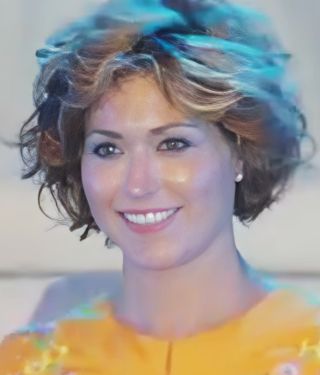
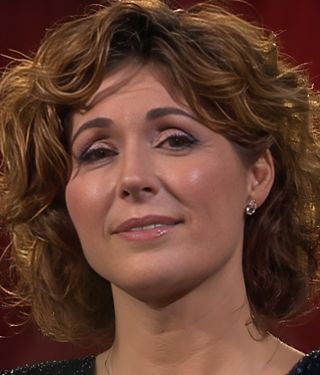
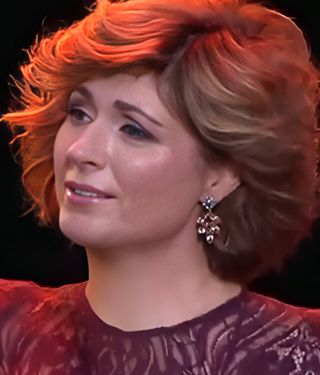
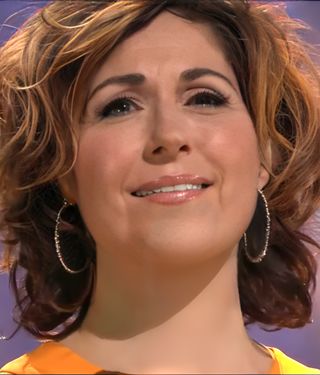
Sissel Kyrkjebø, the international singing sensation and national treasure of Norway, is established as one of the world's leading crossover sopranos. Her angelic and powerful voice has made her a national institution. She has contributed haunting vocals for the soundtrack to "Titanic" and "The Lord of the Rings", as well as selling over ten million solo albums. In 2006, her album, "The Spirit of the Season" with the Mormon Tabernacle Choir went to number one on the Billboard Classical Charts, and received a Grammy nomination. She captivated the whole nation of Norway in 1986, when she sang during the break at the Eurovision final in Bergen - only 16 years old and dressed in a white bunad (traditional Norwegian folk costume). Since then, her fame and success have just continued to soar. She has been praised and acclaimed at home and abroad, and masters both the small and the very large formats -- everything from American TV shows to film music. Her singing knows no bounds - she masters all genres - from opera to rap! She has sung all over the world, and has performed duets with singers like Charles Aznavour, Andrea Bocelli, Jose Carreras, Placido Domingo, Mario Frangoulis, Josh Groban, Brian May, Neil Sedaka, Bryn Terfel, Russell Watson and rapper Warren G. Her list of achievements makes you dizzy -- ranging from Schubert to Deep Purple - "O mio babbino caro" to "Udsigter fra Ulrikken". Truly a very remarkable talent and voice that only comes once in our lifetime! It is difficult to say anything that hasn't already been said about Sissel, but "National Treasure" and "Voice of Norway" are two of the terms used about the "girl from Bergen". In 2005, she was knighted by the King of Norway, being the youngest ever to receive this honor. In 2022 she received the "Seven Pillars of Humanity Creativity Award" in recognition for her years of humanitarian work around the world and actions representing the good in humanity. Click [ HERE ] to view a 4 minute video. On June 28, 2025, Sissel finally performed with the Kristiansand Symphony Orchestra - on the island of Stangholmen - during the Risør chamber music festival. This was her first appearance at this six day festival. In 2025 she was awarded the "Anders Jahre's Culture Prize". This prestigious Norwegian prize, often described as the country's largest honorary award for outstanding contributions to cultural life, was presented to her alongside two other musicians. The total prize amount was NOK 1.5 million, shared among the three recipients. She also received a hand-calligraphed diploma and a beautiful watercolor by Håkon Gullvåg. Sissel was also honored at the "KK Gala 2025" annual awards event celebrating inspiring Norwegian women across various fields for their achievements, contributions, and influence. She was awarded the honorary prize during the gala for her long-standing career and cultural impact. Sissel starred as Maria von Trapp in the 1988 Norwegian production of, "The Sound of Music" at Chateau Neuf in Oslo -- Click [ HERE ]. She also provided the official dubbing and singing voice for Ariel in the Danish, Norwegian and Swedish language versions of Disney's animated film, "The Little Mermaid" in 1989 -- Click [ HERE ]. In 2026, Sissel was involved in a Norwegian animated Christmas film entitled, "Julenissens Verksted" (The Christmas Elf's Workshop / Santa's Workshop). It marks her return to voice acting in a film after more than 35 years. It is described as a family-friendly film full of humor, Christmas atmosphere, and a warm holiday message. Sissel provides the voice for the grandmother (farmor). This is a new experience for her --- being involved from the early stages (when only sketches existed), unlike her previous voice work. She has spoken positively about the project.
|
 | -- MANY FRAMED -- [ HERE ]. It is a VERY large file, over 1 Gb |
| PLEASE NOTE: In the event that a large window containing an ad should appear in the middle of the download screen, simply click on the white "X" above the upper right corner of the ad to close the ad. ****** PLEASE - Be sure to read the "IMPORTANT NOTICE.txt" in the .ZIP file !! | |
 |  |  |
 |  |  |
 |  |  |
 |  |  |
 |  |  |
 |  |  |
 |  |  |
 |  |  |
 |  |  |


