 |
God Has Sent To Us One Of His Angels -- |

| |||
| |||


 | ||||||

 Firstly, we are pleased to offer this Commemorative "Collector's Edition" of the "Reflections Series" that Sissel released in 2019. It is a four disk DVD set consisting of 51 Music Videos and 51 corresponding "Talks" Videos. Please
 Secondly, we are VERY pleased to offer this four DVD Commemorative "Collector's Edition" -- "Platinum Treasures", consisting of: "Sissel w. the Tabernacle Choir", "Strålende Jul w. Sissel", and a collection of "Platinum Favorites". Please
  Thirdly, we are IMMENSELY pleased to offer this four DVD Commemorative "Collector's Edition" -- "Sissel's World", including original songs with lyrics written by Sissel herself. Please
"Sissel" is the Norwegian derivative of the English name "Cecilia" It is a rare and unusual name, commonly found in Denmark and Norway, where it is cherished for its traditional roots. The name is sometimes associated with notable figures in music and arts. Its connection to nature and strength makes it suitable for individuals that embody these qualities. Objectively, it is most commonly associated with the Latin word "caecus", meaning "blind or dim-sighted". Subjectively, however, the name is also linked to Saint Cecilia, a Roman martyr, considered to be the patron saint of music and musicians. This connection often leads to interpretations of Cecilia as representing spiritual vision, hidden beauty, or a girl with vision more than sight. It symbolizes the depth of perception beyond seeing (on the surface). The above listed three DVD collections EACH contain OVER five hours of "Angelic and Heavenly Sights and Sounds", designed to transport the listener from this world of earthly cares into Sissel's World of Ethereal Beauty. |
 |
 |
To Listen to over 500 of Sissel's Captivating Performances - Broken Down Into 18 Categories & Arranged in Chronological Order -- Please Click HERE. |
 |

|

|
Sissel has spoken openly about her Christian faith in several interviews, particularly with Scandinavian Christian and general media. She identifies with the Church of Norway (the former state church, a Lutheran denomination) and describes a personal, non-dogmatic faith shaped by childhood experiences, prayer, and a sense of belonging in church spaces. Key sources and articles: Here are the most relevant publicly available pieces (some Norwegian/Danish sources may require translation tools or subscriptions for full access): Kristeligt Dagblad (Danish Christian daily), December 2019: "Sangerinde: Når jeg kommer ind i kirkerummet, er jeg hjemme" ****** Detailed interview in which Sissel says she has always felt at home in church ("Når jeg kommer ind i en kirke, er jeg hjemme"). She discusses her early involvement in a children's gospel choir at Biskopshavn Church in Bergen (before age 5), the influence of her grandmother (whose father was a Haugean/pietist), prayer as an integral part of life ("there is something greater than me"), her preference for the Church of Norway after exploring free churches as a young adult, and how hymns (especially Brorson's "Mit hjerte alltid vanker") express her faith and human longing for rest/security. She notes she does not attend weekly but finds the church space grounding. Udfordringen (Danish Christian magazine/site), November 2022: "Der er noget større end mig" ****** Covers similar ground: her faith developed personally rather than being imposed by parents; prayer as laying burdens before something greater; the same hymns and sense of belonging in the Church of Norway; and how faith underpins her Christmas singing. Vårt Land (Norwegian Christian newspaper), March 2025: "Nasjonalskatten" / interview by Alf Kjetil Walgermo ****** Recent in-depth piece in which she opens up about her Christian faith, how it has changed over time, her relationship to the church, life after death, and being placed in a "Christian box" as a young person ("Andre har i litt for stor grad fått definere troen for meg"). It also touches personal losses (father, brother) and family. The full text is pay-walled; summaries appear in other outlets. Dagen (Norwegian Christian newspaper), March 2025: "Viktig å lytte til Guds stemme" ****** References the Vårt Land interview, confirms she still believes in God, and notes one of her strongest singing experiences was in a congregation (including mention of a Mormon/LDS-related context, consistent with her collaborations with the Tabernacle Choir). Additional context: Her musical roots include church choirs and hymns; Christmas albums and concerts frequently feature sacred repertoire. She has collaborated with the Mormon Tabernacle Choir (e.g., performances and recordings) and spoken positively about those experiences, while remaining rooted in Norwegian Lutheran tradition. Wikipedia and biographical sources sometimes list Lutheranism, reflecting her Norwegian cultural/religious background, though she emphasizes a personal rather than strictly institutional faith. Her official YouTube channel (Sisselmusic) includes "Sissel Talks" videos on songs like "Crying in the Chapel," "Peace," and her "Reflections Collection" that touch on meaning, loss, inner peace, and something greater ---- often with spiritual undertones but not always explicitly doctrinal. The Haugean (or Haugian) influence on Sissel Kyrkjebø's faith is indirect and personal, transmitted primarily through her paternal grandmother rather than through any formal or intense affiliation on Sissel's part. It appears in her own words as a family root that contributed to a natural, non-rigid Christian environment. The specific family connection: In the 2019 Kristeligt Dagblad interview (and the closely related 2022 Udfordringen piece that draws on the same material), Sissel points to her close relationship with her paternal grandmother (farmor) in Bergen as a key source of her Christian roots. They spent a lot of time together and attended church. She notes: "Min farmor voksede op med en far, som var haugianer (norsk pietistisk lægmandsbevægelse, red.). Jeg har hørt ham beskrevet som en vældig streng mand, som krævede, at hans børnebørn skulle oplæse en bordbøn individuelt og fuldstændig korrekt, inden man kunne indtage måltidet. Min farmor havde slet ikke samme strenghed, men hun levede med troen og gik gerne i kirke. Hendes naturlighed omkring troen smittede af på mig." Translation: Her grandmother grew up with a father who was a Haugean. He is described as a very strict man who required his grandchildren to recite a table prayer individually and completely correctly before they could eat. The grandmother herself lacked that strictness; she lived with the faith and gladly went to church. Her naturalness around faith rubbed off on Sissel. This is the clearest documented link. Sissel does not describe herself as a Haugean or claim a direct inheritance of the movement's stricter practices. Instead, she highlights the softening of that heritage into a lived, non-legalistic faith that felt natural and home-like. What Haugeanism was: The Haugean movement (Norwegian: haugianere / haugianarar) was a Pietistic revival within the Church of Norway, named after the lay preacher Hans Nielsen Hauge (1771–1824). Key characteristics relevant here: Personal conversion and heartfelt piety over formal, state-church ritualism. Hauge emphasized repentance, a living faith, and the "priesthood of all believers." Lay preaching and conventicles (small religious gatherings), which challenged the clergy's monopoly and the 1741 Konventikkelplakaten (Conventicle Act) that restricted unauthorized religious meetings. Hauge was imprisoned multiple times for this. Practical Christianity: diligence, hard work, frugality, enterprise, and moral seriousness. Haugeans were active in industry, farming, and early Norwegian entrepreneurship; the movement is credited with helping shape modern Norwegian society, democracy, and the inner-mission tradition. Egalitarian elements: women sometimes preached or played active roles early on; ordinary people (especially farmers) were empowered. Strictness in some circles: emphasis on correct conduct, prayer, and separation from "worldly" excess could produce rigorous household discipline ---- exactly the kind of strict table-prayer insistence Sissel recalls about her great-grandfather. The movement peaked in the early 19th century and gradually merged into broader Norwegian low-church and inner-mission streams (later associated with organizations such as Normisjon). By the 20th century it had largely lost its distinct organizational identity while leaving a lasting imprint on Norwegian Lutheran piety: personal faith, hymn-singing culture, moral seriousness, and a preference for heartfelt over purely formal religion. How this shows up in Sissel's expressed faith: Sissel's own descriptions align more with a moderated, personalized version of this heritage than with classical Haugean rigor: (1) She feels "at home" in the Church of Norway (the former state church) rather than in free-church settings she explored as a young adult.
Limits of the evidence: No public interviews or biographies go into further genealogical detail, name the great-grandfather, or claim that Sissel or her immediate family practiced distinctive Haugean customs. The reference is brief and framed positively as background that fostered natural faith. Later interviews (including the 2025 Vårt Land piece) discuss her evolving faith, relationship to the church, and personal losses, but do not revisit the Haugean line specifically. In short, the Haugean influence is a familial root that contributed to a gentle, church-rooted, prayerful Christianity. Sissel presents it as something softened and personalized ---- strictness left behind, natural living faith retained ---- rather than as a defining or ongoing identity.
|
|
Explore Hans Nielsen Hauge's Theology Hans Nielsen Hauge (1771–1824) was not a trained academic theologian but a self-taught lay preacher whose thought was deeply rooted in 18th century Danish-Norwegian state Pietism. His theology remained within orthodox Lutheran bounds while emphasizing personal conversion, heartfelt ("living") faith, practical holiness, and the priesthood of all believers. He drew heavily on Erik Pontoppidan's Sandhed til Gudfrygtighed (Truth unto Godliness, 1737) ---- the standard catechetical explanation of Luther's Small Catechism used in schools and confirmation ---- and on Lutheran hymnody and devotional literature. Core experience and starting point: Hauge's decisive spiritual breakthrough occurred on 5 April 1796 while plowing and singing the hymn "Jesus, din søde Forening at smage." He described an overwhelming sense of God's presence, sorrow for sin, love for God and neighbor, and a clear inner call: to confess God's name, exhort people to repent, and turn them from darkness to light. This experience shaped everything that followed. He framed it as the transition from "dead" or outward ("mouth") Christianity to "living" or inward ("heart") faith. Key theological emphases: 1. Ordo salutis (order of salvation): Hauge worked with the classic Pietist sequence transmitted by Pontoppidan: (a) Call / awakening (God's Word and Spirit stir the conscience)
He did not produce a systematic treatise but narrated the process autobiographically and in his writings as a dynamic, experiential reality rather than a purely doctrinal scheme. Conversion was urgent and necessary; without a living, regenerative faith one remained in spiritual death. 2. Living faith versus formal religion Hauge repeatedly attacked "dead" Christianity ---- mere confessional knowledge, outward church attendance, or reliance on the sacraments without heart change. True faith is a regenerative work of the Holy Spirit that produces a transformed mind, hatred of sin, and love for God and neighbor. He insisted that "faith without works is dead" (James 2), yet he remained Lutheran in affirming justification by grace through faith. The difference from some other Pietists was his strong stress on sanctification and obedience as the inevitable fruit and evidence of genuine faith. 3. Law and gospel, repentance, and holiness He placed heavier emphasis on the Law (especially the Ten Commandments and the double love commandment) than many contemporary Lutheran preachers. The Law convicts of sin and drives the sinner to Christ; after conversion it remains the guide for the Christian life. Sanctification is a lifelong struggle against the world, the flesh, and the devil. Good works and diligent earthly vocation are not optional extras but necessary expressions of faith. Idleness was treated as a serious sin. 4. Priesthood of all believers and lay responsibility Every true Christian has both the right and the duty to witness, exhort, and admonish others. This justified Hauge's own itinerant preaching and the participation of women as lay preachers in the early movement. He grounded this in Scripture (e.g., Joel's prophecy of the Spirit poured out on all flesh) and in Luther's teaching on the universal priesthood. At the same time he rejected separatism: Haugeans were to remain within the state church, attend services, and receive the sacraments. 5. Practical, this-worldly Christianity Unlike some mystical or purely contemplative Pietists, Hauge highly valued earthly calling and industrious labor. Serving God included honest work, enterprise, frugality, and social usefulness. This practical bent later helped fuel Haugean involvement in early Norwegian industry and economic life. 6. Mystical and bridal imagery There is a clear mystical strand: the restless heart finding rest in God (echoing Augustine), bridal mysticism (the soul as bride of Christ), and the inner "movement" or "rørelse" of the Spirit. Yet this remained churchly and anti-separatist rather than radical or antinomian. Relation to Lutheran orthodoxy and other movements (1) Orthodox Lutheran: Hauge insisted he taught nothing contrary to the confessional standards. Courts examining him struggled to prove "harmful doctrine."
Sources and style Hauge's theology is found in his numerous tracts (he published around 33 books/pamphlets), letters, and autobiographical writings rather than systematic dogmatics. Early works such as "Betragtning over Verdens Daarlighed" (1796) and "Forsøg til en Afhandling om Guds Viisdom" (1796) combine sharp critique of contemporary preaching with urgent calls to repentance. Later writings, including his "Testament to his Friends," stress loyalty to the church and practical Christian living. In summary, Hauge's theology is a vigorous, experiential, ethically rigorous form of Lutheran Pietism: conversion is essential, faith must be living and productive of good works, every believer shares responsibility for others' salvation, and the Christian life is to be lived industriously within the existing church rather than apart from it. This combination of personal intensity, ethical seriousness, and social practicality is what gave the Haugean movement its distinctive power in Norwegian religious and cultural history. Hauge's view on sanctification Hans Nielsen Hauge placed strong emphasis on sanctification (Norwegian: "helliggjørelse") as an essential and ongoing part of the Christian life. While remaining within orthodox Lutheran bounds on justification by faith alone, he stressed that genuine, "living" faith necessarily produces a transformed life of obedience, good works, and practical holiness. This was one of the points where he most clearly distinguished himself from both dry formalism and from the Moravian (Herrnhut) emphasis on grace and Christ's wounds. Sanctification in the ordo salutis **** Hauge worked within the Pietist framework he inherited from Erik Pontoppidan's, "Sandhed til Gudfrygtighed (Truth unto Godliness)". In that scheme, sanctification is the fourth major stage after calling, illumination, and conversion. It includes: Regeneration (new birth) **** Justification ** Renewal / progressive sanctification — the lifelong process of growing in likeness to Christ, fighting sin, and living according to God's will. For Hauge this was not a purely passive or instantaneous event. After conversion the believer enters a continuous struggle against the world, the flesh, and the devil. The Christian must: "work out salvation with fear and trembling", deny self, and follow in Christ's footsteps. Faith and works Hauge repeatedly insisted that, "faith without works is dead". Good works are not the basis of justification (he rejected any idea of meriting salvation), but they are the necessary fruit, evidence, and outworking of living faith. He argued that one cannot claim the benefits of Christ's atonement while continuing in an unrepentant or worldly lifestyle. In one interrogation he contrasted his view with the Moravians: they relied more on the atonement without sufficient regard for good works, whereas he taught that the atonement does not benefit those who do not also lead a righteous and Christian life. He spoke more about the labor of faith, practical obedience, and good works than about the subjective assurance of salvation or the details of justification. The true Christian life is marked by: (1) Hatred of sin and radical break with former ways
Practical and this-worldly character Unlike some more contemplative or world-renouncing forms of Pietism, Hauge gave high value to ordinary work and earthly vocation as arenas of sanctification. Serving God included honest labor, enterprise, and usefulness to neighbor and community. Idleness was regarded as a serious sin. This practical orientation later helped shape the Haugean reputation for economic initiative and social responsibility. Tone and balance Hauge's preaching on sanctification could sound rigorous and law-oriented. He warned strongly against a broad, easy path to heaven and against "dead" Christianity that stopped at outward profession or sacramental participation. At the same time he remained Lutheran: salvation is by grace through faith; the Christian still struggles with remaining sin and never reaches perfection in this life. The goal is progressive conformity to Christ rather than sinless perfectionism. In short, for Hauge sanctification was the indispensable, lifelong expression of a living faith. Conversion without a corresponding change of life and conduct was incomplete or spurious. The regenerated person is called to active obedience, moral seriousness, and fruitful service ---- both in spiritual witness and in everyday work ---- under the guidance of the Holy Spirit and the Word of God. Hauge's view on good works Hans Nielsen Hauge taught that good works are the necessary and inevitable fruit of living faith, though never the basis of justification. He remained within classic Lutheran teaching (justification by grace through faith alone) while placing unusually strong practical emphasis on the ethical outworking of that faith. In this he stood closer to the ethical seriousness of early Pietism and to James 2 ("faith without works is dead") than to any purely forensic or quietistic understanding of the Christian life. Core principles (1) Justification first, works as consequence
Distinctive accents Hauge distinguished himself from the Moravians (Herrnhuters) precisely on this point. He judged them too one-sided in their focus on grace, Christ's wounds, and subjective assurance, while under-emphasizing the call to follow Christ in practical holiness and good works. Against them he maintained that reconciliation does not benefit those who fail to demonstrate a righteous Christian walk. He also differed from more contemplative or world-renouncing strands of Pietism by giving high value to ordinary earthly labor. Diligent work in one's calling, frugality, honesty in business, and usefulness to neighbor were themselves expressions of good works and part of serving God. Idleness was treated as a serious sin. This practical orientation later contributed to the Haugean reputation for enterprise and social responsibility. Tone in his preaching and writing Hauge's early tracts in particular sound rigorous and urgent. He warned against a broad, easy path to heaven and against "dead" or merely formal Christianity that stopped at outward profession or sacramental participation. The Christian is called to: "work out salvation", deny self, take up the cross, and produce the fruits of the Spirit in concrete daily life. At the same time he never taught perfectionism: the believer remains a sinner who struggles until death, dependent on grace. In later writings the emphasis on justification by faith becomes somewhat clearer, yet the consistent thread remains: living faith is active faith. Good works are not optional extras or means of merit; they are the visible proof and necessary consequence of a heart renewed by the Holy Spirit. In summary, for Hauge good works occupy the place of indispensable fruit and evidence rather than root or cause of salvation. A faith that does not issue in obedience, moral seriousness, and practical service is not the living faith that justifies. Hauge's view on justification Hans Nielsen Hauge held a classic Lutheran view of justification by grace through faith alone, while embedding it firmly within a Pietist framework that stressed the necessity of a living, regenerative faith. He did not develop a highly technical or scholastic doctrine of justification, but his consistent teaching aligns with the Reformation solas and with the catechetical tradition of Erik Pontoppidan. Core position (1) Justification is God's gracious act of declaring the sinner righteous for the sake of Christ alone.
This remained the foundation even when he spoke most strongly about the ethical demands of the Christian life. Living faith as the instrument Hauge sharply distinguished between "dead" or merely outward ("mouth") faith and true, regenerative ("heart" or "living") faith. Only the latter justifies. Living faith is the work of the Holy Spirit: it involves conviction of sin, repentance, trust in Christ, and the new birth. A purely intellectual or formal assent to doctrine, or mere participation in the sacraments without heart change, does not save. In the ordo salutis he inherited, justification is closely linked with regeneration and is followed by progressive sanctification. Justification is not an isolated forensic declaration detached from the transformation of the person; the same Spirit who justifies also renews. Relation to works and sanctification Although justification is by faith alone, Hauge insisted that genuine justifying faith inevitably produces good works and a changed life. He could therefore say that the benefits of the atonement do not apply to those who continue in unrepentant sin. This is not a return to works-righteousness; it is the classic Lutheran insistence (shared with the Formula of Concord and with James) that living faith is never alone. Works are the fruit and evidence of justification, never its cause or condition. He criticized the Moravians for what he saw as an overly one-sided emphasis on grace and subjective assurance that underplayed the call to obedience. At the same time he remained firmly anti-legalistic on the question of how one is made right with God. Development and tone In his earlier, more polemical writings the urgency of repentance and the danger of false assurance can make the language sound rigorous. In later texts the emphasis on free grace and justification by faith becomes somewhat clearer, yet the basic structure never changes: salvation is by grace alone through a living faith in Christ, and that faith is authenticated by a life of obedience and good works. In short -- Hauge's doctrine of justification is orthodox Lutheran: forensic, gracious, and received by faith alone. What gives it its distinctive Haugean coloring is the insistence that the faith which justifies is a regenerative, life-transforming reality rather than a mere intellectual or formal transaction. I believe that God is saying to those of us who have "eyes to see and ears to hear" -- "I have placed a small part of My Divine Life within Sissel for you to Experience - to Taste - to Touch. For those of you who will open yourselves up to receive - through her person, her talent and her voice - I will share with you a VERY real part of MY supernatural Joy, Life and Love !!" I believe that through Sissel, God is reaching out to ALL of us with an invitation saying: Come, you who are hungry and thirsty -- Taste and see that the LORD is good. How blessed is the one who takes shelter in Him. ** For the kingdom of God is demonstrated not in idle talk, but with power (and love). ** Ps 34:8 ** 1Cor 4:20 Please Click [ HERE ] to read a short article on my perspective regarding Sissel's Click [ HERE ] to read an "Open Question for Sissel" regarding HER "Life Perspective".
|
|
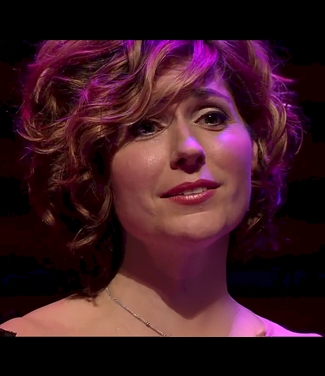
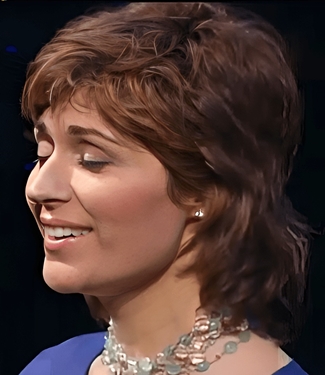
Sissel Kyrkjebø, the international singing sensation and national treasure of Norway, is established as one of the world's leading crossover sopranos. Her angelic and powerful voice has made her a national institution. She has contributed haunting vocals for the soundtrack to "Titanic" and "The Lord of the Rings", as well as selling over ten million solo albums. In 2006, her album, "The Spirit of the Season" with the Mormon Tabernacle Choir went to number one on the Billboard Classical Charts, and received a Grammy nomination. She captivated the whole nation of Norway in 1986, when she sang during the break at the Eurovision final in Bergen - only 16 years old and dressed in a white bunad (traditional Norwegian folk costume). Since then, her fame and success have just continued to soar. She has been praised and acclaimed at home and abroad, and masters both the small and the very large formats -- everything from American TV shows to film music. Her singing knows no bounds - she masters all genres - from opera to rap! She has sung all over the world, and has performed duets with singers like Charles Aznavour, Andrea Bocelli, Jose Carreras, Placido Domingo, Mario Frangoulis, Josh Groban, Brian May, Neil Sedaka, Bryn Terfel, Russell Watson and rapper Warren G. Her list of achievements makes you dizzy -- ranging from Schubert to Deep Purple - "O mio babbino caro" to "Udsigter fra Ulrikken". Truly a very remarkable talent and voice that only comes once in our lifetime! It is difficult to say anything that hasn't already been said about Sissel, but "National Treasure" and "Voice of Norway" are two of the terms used about the "girl from Bergen". In 2005, she was knighted by the King of Norway, being the youngest ever to receive this honor. In 2022 she received the "Seven Pillars of Humanity Creativity Award" in recognition for her years of humanitarian work around the world and actions representing the good in humanity. Click [ HERE ] to view a 4 minute video. On June 28, 2025, Sissel finally performed with the Kristiansand Symphony Orchestra - on the island of Stangholmen - during the Risør chamber music festival. This was her first appearance at this six day festival. In 2025 she was awarded the "Anders Jahre's Culture Prize". This prestigious Norwegian prize, often described as the country's largest honorary award for outstanding contributions to cultural life, was presented to her alongside two other musicians. The total prize amount was NOK 1.5 million, shared among the three recipients. She also received a hand-calligraphed diploma and a beautiful watercolor by Håkon Gullvåg. Sissel was also honored at the "KK Gala 2025" annual awards event celebrating inspiring Norwegian women across various fields for their achievements, contributions, and influence. She was awarded the honorary prize during the gala for her long-standing career and cultural impact. Sissel starred as Maria von Trapp in the 1988 Norwegian production of, "The Sound of Music" at Chateau Neuf in Oslo -- Click [ HERE ]. She also provided the official dubbing and singing voice for Ariel in the Danish, Norwegian and Swedish language versions of Disney's animated film, "The Little Mermaid" in 1989 -- Click [ HERE ]. In 2026, Sissel was involved in a Norwegian animated Christmas film entitled, "Julenissens Verksted" (The Christmas Elf's Workshop / Santa's Workshop). It marks her return to voice acting in a film after more than 35 years. It is described as a family-friendly film full of humor, Christmas atmosphere, and a warm holiday message. Sissel provides the voice for the grandmother (farmor). This is a new experience for her --- being involved from the early stages (when only sketches existed), unlike her previous voice work. She has spoken positively about the project.
|
 | -- MANY FRAMED -- [ HERE ]. It is a VERY large file, over 1 Gb |
| PLEASE NOTE: In the event that a large window containing an ad should appear in the middle of the download screen, simply click on the white "X" above the upper right corner of the ad to close the ad. ****** PLEASE - Be sure to read the "IMPORTANT NOTICE.txt" in the .ZIP file !! | |
 |  |  |
 |  |  |
 |  |  |
 |  |  |
 |  |  |
 |  |  |
 |  |  |
 |  |  |
 |  |  |


